
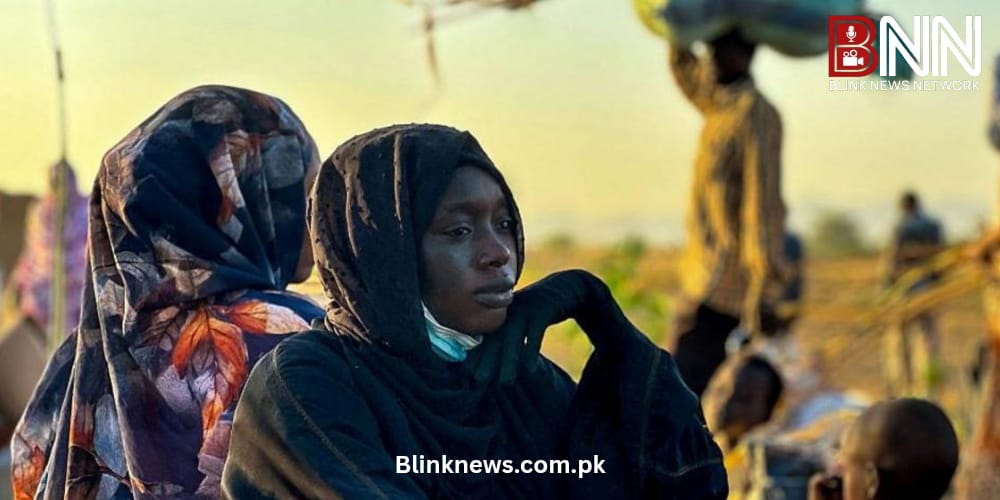
A new Amnesty International report released on Wednesday accuses Sudan’s Rapid Support Forces (RSF) of committing crimes against humanity including murder, rape, torture, and ethnic cleansing during their 18-month siege of el-Fasher in Darfur. The UN previously warned the assault bore the “hallmarks of genocide.” The RSF has denied the scale of the allegations.
Amnesty International has just released a damning new report accusing Sudan’s Rapid Support Forces (RSF) of committing crimes against humanity during their campaign to seize el-Fasher, the capital of North Darfur. The findings are graphic, deeply disturbing, and demand urgent global attention.
According to Amnesty International’s report (July 2026), the RSF’s crimes included “murder, forcible transfer, imprisonment, torture, rape, sexual slavery, other forms of sexual violence, enslavement, extermination and persecution.” These are not vague accusations the report draws on accounts from more than 200 survivors and a review of 89 open-source videos, backed by extensive satellite imagery analysis of North Darfur.
One survivor—a 17-year-old boy attacked in Abu Zerega, a town south of el-Fasher, described being tied up, beaten with sticks and an AK-47, then shot in the leg by a fighter on a camel. Eight of his cousins were killed in the same attack. Four of them were boys between the ages of 11 and 17. He now walks on crutches.
Children, Amnesty says, were not collateral damage. They were deliberately targeted. Agnès Callamard, Amnesty International’s Secretary General, stated that children “have been killed, injured, raped, abducted, and forcibly recruited on a massive scale.” That sentence should stop you cold.
The ethnic dimension of the violence is critical to understanding what happened in el-Fasher. Amnesty researchers found that RSF fighters, predominantly Arab militias with a documented history of violence against Black African communities in Darfur specifically targeted members of non-Arab groups. In el-Fasher, this meant going after the Zaghawa ethnic community, both the armed defenders of the city and civilians who had nothing to do with the fighting. Victims were reportedly identified and killed using ethnic slurs. The Amnesty report states the evidence gathered “may be relevant to the crime of genocide.”
This is not the first time such warnings have been raised. The United Nations said early last year that the assault on el-Fasher bore the “hallmarks of genocide.” According to the UN, more than 6,000 people were killed in just three days during the assault on the city. Sudan’s three-year civil war, fought between the RSF and the Sudanese Armed Forces (SAF) has now killed hundreds of thousands of people and forced more than 14 million from their homes. Aid agencies report that 28 million people currently face acute hunger, making this the world’s worst humanitarian crisis.
The RSF has not commented on the Amnesty report specifically, but has previously denied accusations of this nature. RSF leadership has acknowledged that some violations occurred while insisting the scale of the atrocities is being exaggerated. Both the RSF and the SAF have been accused of war crimes and both deny them.
Callamard did not mince words in her response to the findings. “It is a stain on the conscience of humanity,” she said, calling for an immediate ceasefire in Sudan and the urgent deployment of an international protection force for civilians. Amnesty has also identified specific RSF commanders it believes are responsible for violations of international law, underlining the organization’s push for accountability.