
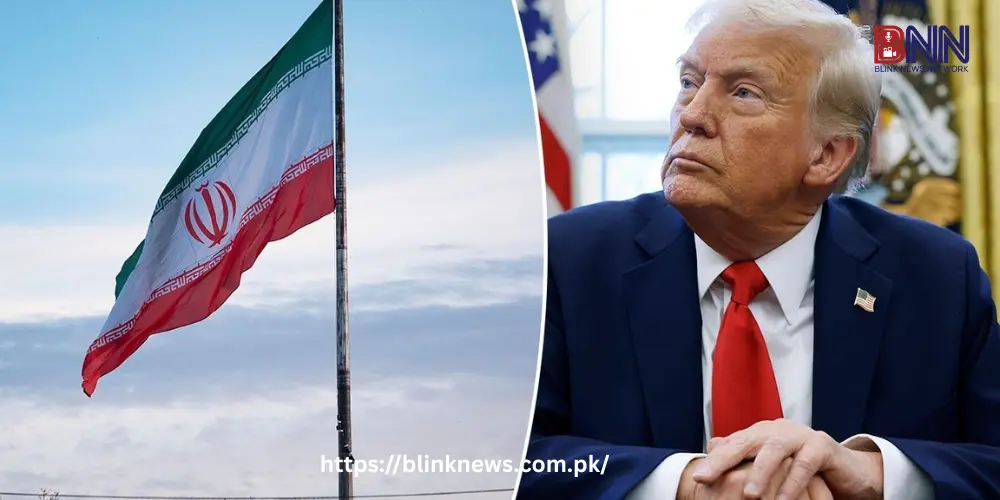
U.S. President Donald Trump says the United States is still “far” from deciding whether to deploy American troops inside Iran to secure sensitive nuclear materials, pushing back on recent media reports suggesting the option was under serious consideration.
In an interview with the New York Post, Trump stated clearly that Washington has not taken any concrete steps toward sending ground forces into Iran. The president described the idea as part of ongoing discussions rather than an active plan. “We haven’t made any decision on that. We’re nowhere near it,” Trump said when asked whether the United States might deploy troops to take control of Iran’s stockpile of highly enriched uranium.
The comments follow a wave of reports indicating that U.S. and Israel officials had discussed potential scenarios in which special operations forces could move in to secure nuclear materials if the situation inside Iran became unstable. Such discussions, analysts say, are often part of contingency planning during periods of heightened geopolitical tension.
The debate is closely tied to the long-running international dispute surrounding Iran’s nuclear program. Western governments have long suspected Tehran of seeking the capability to develop nuclear weapons, an accusation Iranian officials have consistently denied. Tehran maintains that its uranium enrichment activities are designed solely to support civilian energy production and scientific research.
Tensions escalated sharply in recent months after a series of military actions across the region. According to multiple reports, U.S. and Israeli strikes targeted sites linked to Iran’s nuclear and military infrastructure. Iran responded with attacks across parts of the Middle East, raising fears of a broader regional confrontation and prompting renewed scrutiny of Tehran’s nuclear capabilities.
Trump previously claimed that U.S. military strikes in 2025 had effectively destroyed Iran’s nuclear program. However, he later suggested that Iran might attempt to rebuild key elements of that program. Iranian authorities have rejected those assertions, insisting their facilities remain intact and that the country’s nuclear activities comply with peaceful objectives.
Security experts note that the question of who controls nuclear materials during a crisis is a major concern for global powers. Highly enriched uranium, if left unsecured during conflict or political instability, could potentially be diverted or fall into the wrong hands. For that reason, governments often examine contingency plans for safeguarding such materials, even if those plans are never implemented.
For now, Trump’s remarks suggest the United States is not preparing for immediate military intervention inside Iran. Still, the issue remains highly sensitive as diplomatic tensions and military pressures continue to shape relations between Washington and Tehran.
With regional instability showing few signs of easing, policymakers and security analysts will be closely watching the next moves from both sides, particularly any developments related to Iran’s nuclear program and international efforts to monitor or secure it.
Read more posts on Blink News Network