
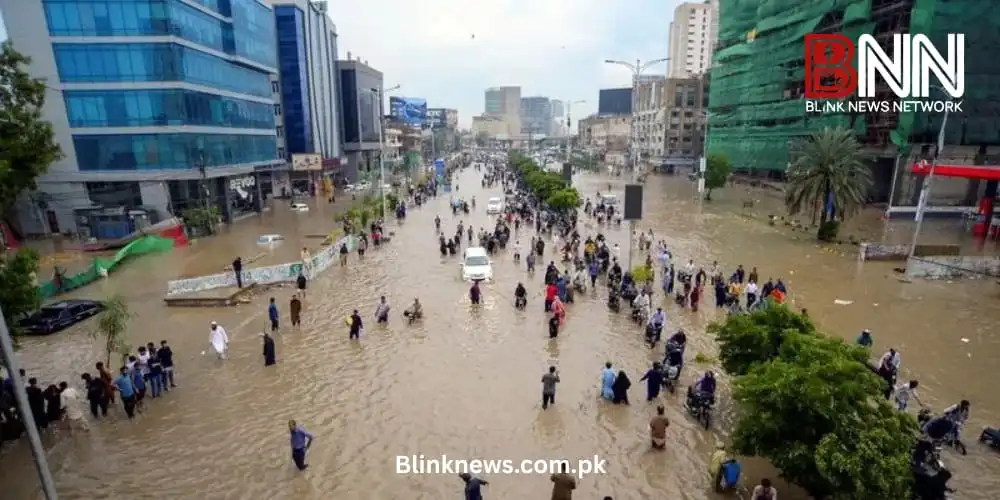
Karachi witnessed an unprecedented spell of rainfall in April, setting a new record for the highest precipitation recorded within a 24-hour period for the month. The unusually heavy downpour, confirmed by the Pakistan Meteorological Department, left large parts of the city inundated and disrupted daily life across multiple districts.
April is typically considered a relatively dry month for Karachi, making the intensity of this rainfall particularly striking. According to meteorological officials, the volume recorded far exceeded historical averages for this time of year. The development has raised concerns among climate experts, who point to a growing pattern of erratic weather events linked to shifting climate conditions.
The immediate impact on the ground was severe. Key roads were submerged under rainwater, bringing traffic to a near standstill in several areas. Commuters faced long delays, while public transport services struggled to operate under challenging conditions. In low-lying neighborhoods, water entered homes and commercial spaces, damaging property and forcing residents to seek temporary relief measures.
Emergency response teams were deployed across affected areas, working to drain accumulated water and assist stranded citizens. Officials stated that efforts to restore normalcy were ongoing, though progress was slowed by the sheer volume of water and limitations within the city’s drainage infrastructure. Pumps were activated in critical zones, but in many places, stagnant water remained a persistent issue hours after the rainfall subsided.
The situation has once again highlighted long-standing concerns about Karachi’s urban infrastructure. Experts and residents alike have questioned the effectiveness of the city’s drainage systems, which have repeatedly failed to cope with heavy rains. Urban planners note that rapid population growth, unregulated construction, and inadequate maintenance of stormwater systems have compounded the problem over time.
Climate specialists warn that such extreme weather patterns may become more frequent. They argue that rising global temperatures are altering traditional weather cycles, leading to sudden and intense rainfall events even in months that historically see little precipitation. This trend poses significant challenges for cities like Karachi, where infrastructure has not kept pace with environmental changes.
Authorities have urged citizens to remain cautious, avoid unnecessary travel, and follow safety advisories during ongoing weather fluctuations. Meanwhile, public calls for improved planning and investment in drainage and flood management systems are growing louder.
As Karachi recovers from this latest disruption, attention is likely to remain focused on how city officials respond. With climate variability increasing, the need for resilient infrastructure and proactive urban planning has become more urgent than ever.