
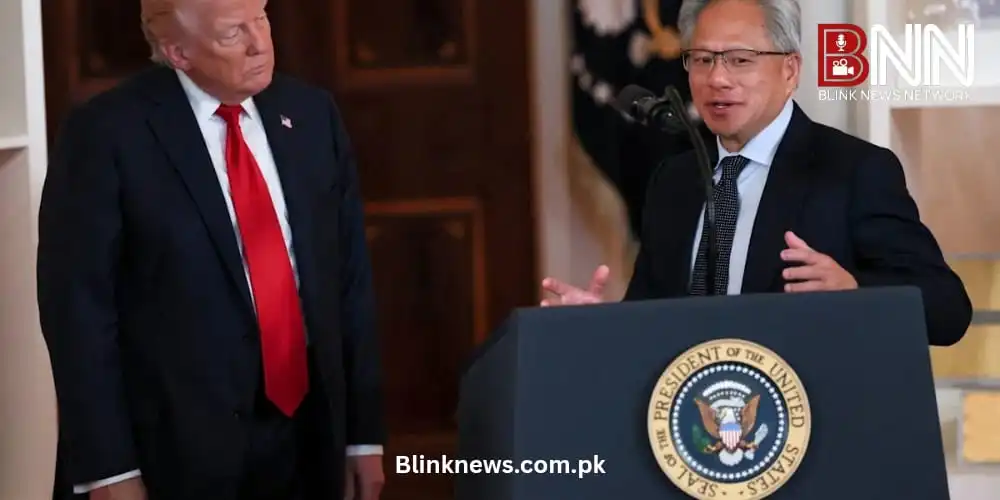
Nvidia CEO Jensen Huang has joined a high-profile diplomatic and business push led by US President Donald Trump to “open up” China’s technology and trade markets, marking a significant moment in US-China economic engagement ahead of renewed bilateral talks.
The development comes as senior American officials and top business leaders increase efforts to ease restrictions on trade and technology exchange between the two global rivals. Nvidia, a leading artificial intelligence chipmaker, stands at the center of global competition over advanced computing, semiconductors, and AI infrastructure.
President Trump, who has repeatedly called for expanded market access for US companies in China, has positioned the initiative as part of a broader strategy to rebalance trade relations and secure stronger economic opportunities for American firms. Officials say the mission focuses on reducing barriers, improving export access, and creating new frameworks for technology cooperation.
Jensen Huang’s involvement highlights the growing role of private-sector leaders in shaping US foreign economic policy. Nvidia’s chips power much of the world’s AI systems, data centers, and high-performance computing networks, making the company a key stakeholder in ongoing debates over export controls and technological decoupling.
Sources familiar with the discussions say Huang has engaged in meetings with US policymakers and Chinese officials in recent weeks to explore potential pathways for expanded semiconductor trade, while still respecting existing regulatory frameworks. The talks also reflect industry concerns over fragmented global supply chains and rising restrictions on advanced chip exports.
China remains one of the most important markets for Nvidia, despite tighter US export controls on high-end AI chips. The company has repeatedly adjusted its product offerings to comply with US regulations while maintaining commercial ties with Chinese technology firms.
At the same time, Beijing has expressed interest in stabilizing economic relations with Washington, especially in sectors tied to artificial intelligence, cloud computing, and semiconductor manufacturing. Chinese officials continue to emphasize the importance of predictable trade policies for long-term technological development.
The initiative comes at a sensitive time in US-China relations, as both countries continue negotiations on tariffs, investment rules, and technology restrictions. Analysts say participation by a major figure like Huang signals potential momentum toward pragmatic cooperation, even amid broader strategic competition.
Industry experts note that the semiconductor sector sits at the heart of global economic rivalry, with both nations investing heavily in domestic chip production and AI research. Any easing of restrictions could have significant implications for global markets, supply chains, and the future of artificial intelligence development.
While officials have not confirmed any final agreements, the ongoing discussions suggest an effort to balance national security concerns with commercial interests. Both governments continue to signal cautious openness to dialogue, even as competition in critical technologies intensifies.
For now, the inclusion of Nvidia’s leadership in the diplomatic-economic push underscores the growing intersection of business influence and international policy in shaping the next phase of US-China relations.