
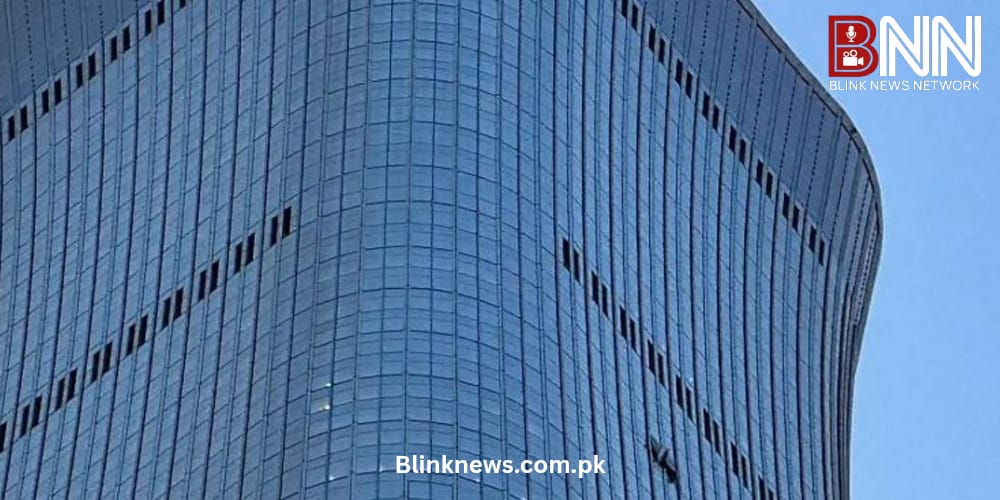
On June 27, 2026, a small plane crashed into Beijing’s 109-story CITIC Tower during Friday afternoon rush hour, killing the pilot and injuring 13 people. Chinese authorities censored nearly all coverage within hours. No official explanation has been given for how the plane breached one of the world’s most restricted airspaces.
It sounds like something out of a movie. A small aircraft cuts through one of the most surveilled airspaces on the planet, slams into a 528-meter skyscraper in the heart of Beijing, and sends glass and debris raining down onto rush-hour streets below. And then—almost nothing. No headlines. No government statement. No answers.
This is exactly what happened on the afternoon of Friday, June 27, 2026. And the silence that followed may be just as alarming as the crash itself.
What happened when the plane hit Beijing’s CITIC Tower?
The aircraft—identified from online images as a Sunward SA 60L Aurora, a domestically manufactured light sport aircraft—slammed into the upper levels of the CITIC Tower, Beijing’s tallest building and one of the most prominent skyscrapers in all of China. The pilot, the only person on board, was killed. Thirteen people on the ground were injured.
Footage captured in the immediate aftermath showed the plane’s tail section tumbling down the side of the building, crowds evacuating in a panic, and firetrucks rushing to the scene. That footage spread rapidly online—but only for a short while.
How did China censor the Beijing plane crash?
Within hours of the crash, Chinese censors had scrubbed nearly all references to the incident from domestic social media. A search for “plane crash in Beijing” on Weibo, China’s version of X (formerly Twitter), returned no relevant results. State broadcaster CCTV—headquartered directly across the street from the crash site—made no mention of the incident whatsoever.
The Chinese government did not publicly acknowledge the crash on the day it happened. It wasn’t until Saturday afternoon local time that media affiliated with the Beijing government released a brief statement, confirming that “a single-engine double-seat light sports aircraft collided with a high-rise building in flight” and that an investigation had been launched.
No cause has been confirmed. Authorities have not said whether the crash was accidental or deliberate.
Why is the airspace breach so alarming?
Here’s what makes this story really extraordinary: Beijing’s airspace is among the most restricted in the world. Flying a light aircraft over the city requires dual approval from both the Civil Aviation Administration of China and the People’s Liberation Army Air Force. Just last month, Beijing enacted sweeping new regulations to effectively ban casual recreational flying and consumer drones entirely.
And yet, somehow, this plane got through.
Unverified flight data from Flightradar24 posted online appeared to show a dramatically deviated flight path after the aircraft departed from Beijing’s Shifosi airport. The CITIC Tower sits in one of the city’s most sensitive neighborhoods—home to the UK and Vietnamese embassies, the World Bank, and the IFC’s China offices, among others.
How a small plane reached a 109-story skyscraper in that location, without being intercepted, remains completely unanswered.
What does China’s silence tell us?
This is not the first time Chinese authorities have responded to a deadly, high-profile incident with an information blackout. More than four years after a China Eastern Boeing 737-