
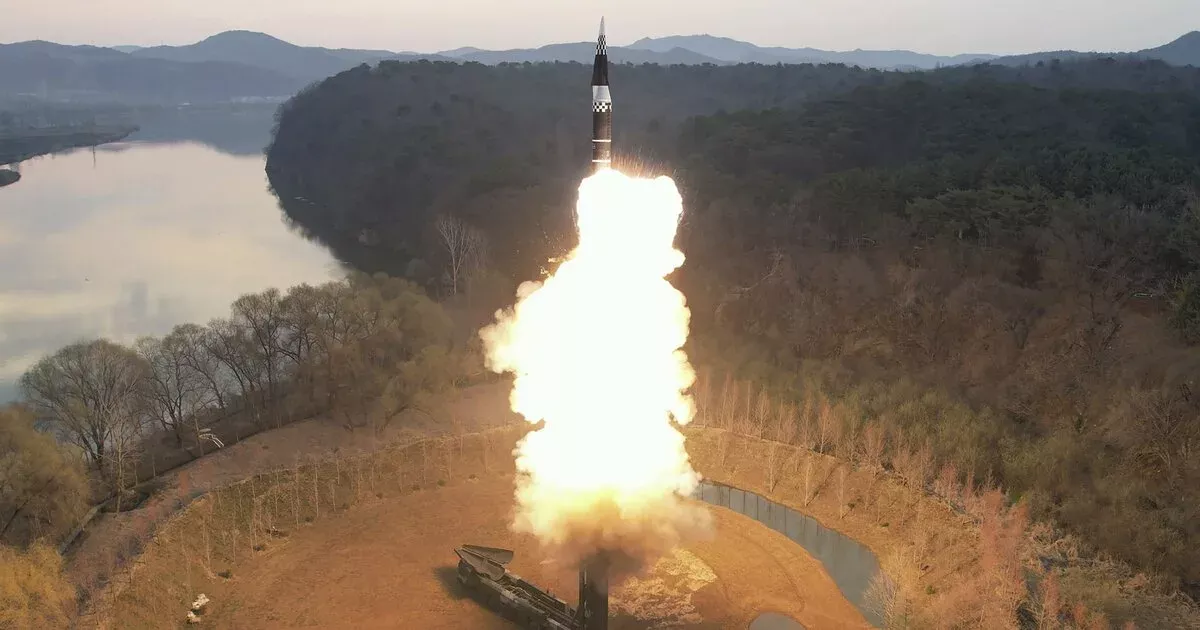
North Korea fired two rounds of ballistic missiles on Wednesday, South Korea’s military said, in a fresh escalation that adds pressure to already strained regional ties.
According to South Korea’s Joint Chiefs of Staff, multiple short-range ballistic missiles were launched from the Wonsan area on the country’s east coast. A second round followed hours later, signaling a coordinated show of force.
The missiles traveled about 240 kilometers before landing in waters off the Korean Peninsula. Another projectile flew a longer distance, with authorities still assessing its trajectory and type.
Seoul and Washington are conducting a joint analysis of the launches. Japan also confirmed that at least one missile landed in the sea but did not enter its territory.
South Korea’s government called the launches a provocation. An emergency security meeting was convened soon after detection.
The tests come at a sensitive moment.
Only days earlier, North Korea had sent mixed signals. Officials in Pyongyang issued rare remarks that appeared less confrontational toward Seoul. That tone has now shifted back to a hard line.
Recent statements from North Korean officials described South Korea as an enemy state. The missile launches reinforce that stance and weaken hopes for renewed dialogue.
This marks one of several missile tests by North Korea in 2026. Analysts link the activity to ongoing weapons development, including solid-fuel systems that allow faster launches and improved mobility.
The pattern is clear.
• Conduct missile tests to signal strength
• Shift rhetoric between threat and limited outreach
• Maintain pressure on South Korea and the United States
For you, the implications are immediate.
• Higher security tension in East Asia
• Increased military readiness in South Korea and Japan
• Potential impact on global markets if tensions rise further
No damage or casualties have been reported so far. Still, the launches violate United Nations Security Council resolutions, which ban North Korea from testing ballistic missile technology.
Attention now turns to the next move.
South Korea and its allies are expected to increase surveillance and military coordination. Any further launches or strong responses could deepen the standoff.
The situation remains volatile.