
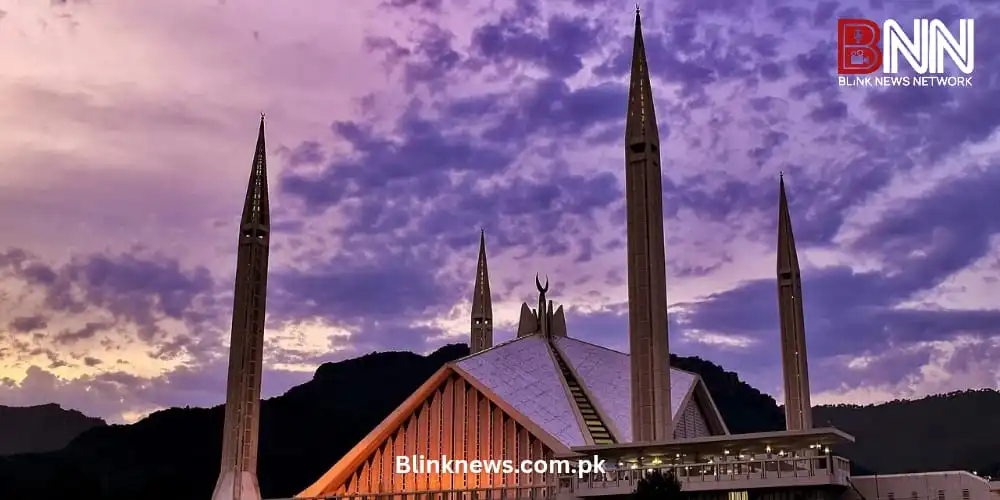
Standing majestically at the foothills of the Margalla Hills, the Faisal Mosque is one of Pakistan’s most iconic landmarks and a symbol of modern Islamic architecture. Renowned for its unique design and spiritual significance, the mosque continues to attract worshippers and tourists from around the world.
Named after late Saudi King Faisal bin Abdulaziz, who funded the project, the mosque was completed in 1986 and has since become a defining feature of Islamabad’s skyline. Unlike traditional mosques that feature domes, Faisal Mosque boasts a distinctive tent-shaped structure inspired by a Bedouin desert tent, making it one of the most unconventional mosque designs in the world.
Designed by Turkish architect Vedat Dalokay, the mosque combines minimalist modern aesthetics with traditional Islamic geometric patterns. Its four towering minarets, each standing 90 meters high, resemble Turkish-style pencil minarets and add to the mosque’s striking appearance.
Spread over 54,000 square feet, Faisal Mosque can accommodate over 100,000 worshippers at a time, including the vast courtyard and surrounding grounds, making it one of the largest mosques in South Asia.
The mosque’s white marble exterior glows brilliantly under sunlight, while its interior features elegant calligraphy, intricate chandeliers, and a grand prayer hall that creates a serene spiritual atmosphere for visitors.
Beyond its architectural beauty, Faisal Mosque serves as a major cultural and religious hub, hosting prayers, Islamic gatherings, and educational activities throughout the year.
Today, Faisal Mosque remains not only a place of worship but also a proud symbol of Pakistan’s heritage, admired globally for its breathtaking blend of faith, art, and innovation.