
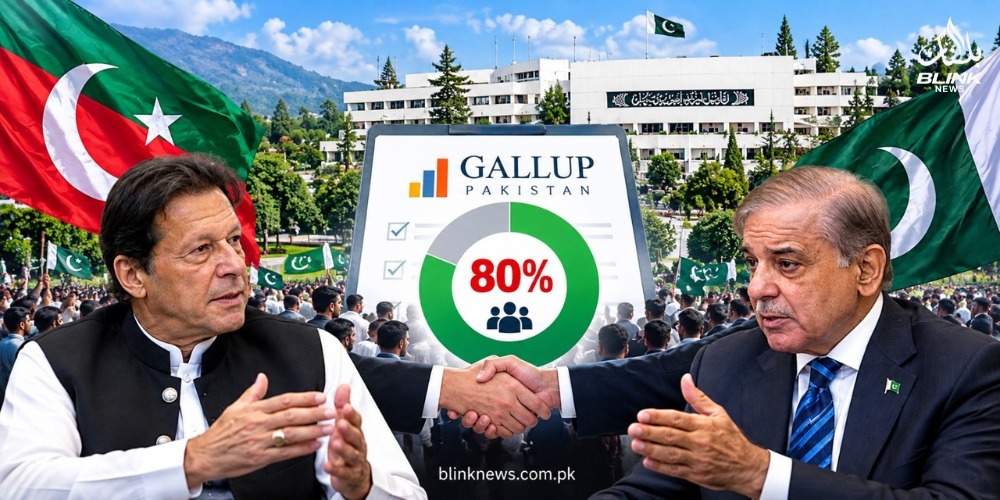
A reported Gallup Pakistan survey has highlighted public support for dialogue between the federal government and Pakistan Tehreek-e-Insaf (PTI), with 80 percent of Pakistanis reportedly recommending negotiations to resolve political disputes. The finding points to the importance many citizens place on peaceful discussions and cooperation between political leaders.
Political disagreements have remained a major feature of Pakistan’s political landscape. Differences between the government and opposition have affected parliamentary discussions, political activities, and public debate. Against this backdrop, the reported survey finding has renewed attention on whether negotiations could help reduce tensions and create a path toward political stability.
The reported results suggest that dialogue remains an important option for addressing disagreements. However, the survey’s publication date, sample size, methodology, and exact question wording should be checked against the original Gallup Pakistan report before the figures are treated as independently verified.
Gallup Pakistan Survey Highlights Public Support for Dialogue
According to the headline of the reported survey, approximately 80 percent of respondents favour negotiations between the federal government and PTI to resolve political issues.
The finding suggests that a substantial majority of those surveyed prefer political leaders to explore discussions rather than allow disagreements to continue without progress. It also highlights the importance of understanding public expectations when political parties decide how to approach negotiations.
Gallup Pakistan is known for conducting public opinion research on political, social, and economic issues. Its surveys can provide insight into citizens’ views, although the reliability and interpretation of individual findings depend on the research methods used.
The reported result does not necessarily mean that respondents support every demand made by either side. Supporting negotiations is different from agreeing with a particular political party, policy, or proposed settlement.
What Does the 80 Percent Figure Mean?
If confirmed by the original survey, the figure would indicate considerable support among respondents for dialogue as a way to address political disagreements.
Citizens may favour negotiations because political uncertainty can affect economic confidence, business decisions, public services, and the country’s broader development priorities.
However, the percentage should be interpreted within the survey’s full context. The remaining respondents may have different views, and their opinions cannot be determined without examining the detailed findings.
Why PTI and the Federal Government Need Dialogue
Negotiations between PTI and the federal government could provide an opportunity to discuss disputed political matters and identify areas where compromise may be possible.
Political negotiations do not require either side to abandon its position entirely. Instead, they can create a structured environment in which representatives explain their demands, respond to opposing arguments, and explore mutually acceptable solutions.
Reducing Political Tensions
Political polarization can make cooperation difficult when parties view disagreements as a contest that one side must win completely.
Dialogue may help reduce this pressure by giving both sides a formal channel to communicate. Direct discussions can also help clarify misunderstandings, establish priorities, and identify issues that require further consultation.
For negotiations to succeed, both parties would need to approach the process with clear objectives and a willingness to consider practical solutions.
Strengthening Parliamentary Democracy
Pakistan’s democratic system provides political parties with parliamentary forums and other lawful channels to raise concerns and debate policy.
Constructive negotiations can complement parliamentary proceedings by helping political representatives discuss disagreements before they become more difficult to resolve.
A transparent process could also improve public understanding of the issues under discussion. When parties communicate their positions clearly, citizens can better assess the progress and limitations of negotiations.
Public Opinion and Political Stability in Pakistan
Public opinion can influence how political parties communicate with voters and respond to national challenges. A survey showing broad support for negotiations, if verified, would provide an important indication of public preferences regarding conflict resolution.
Political stability is relevant to several areas of national life. Businesses need predictable conditions for investment and planning, while citizens expect political leaders to address inflation, employment, education, healthcare, and other pressing concerns.
Although negotiations alone cannot solve every economic or administrative problem, reducing political uncertainty may create better conditions for policymakers to focus on these priorities.
Economic Concerns and Governance
Political disagreements can contribute to uncertainty about government decisions, policy continuity, and institutional cooperation.
A successful dialogue process could help establish greater clarity on disputed matters and improve coordination where political differences have affected governance.
Nevertheless, the relationship between political negotiations and economic improvement is not automatic. Sustainable progress also depends on effective policymaking, institutional performance, financial management, and implementation.
What Could Make Government-PTI Negotiations Successful?
If both sides decide to pursue serious negotiations, several factors could influence the outcome.
Clear objectives: Each side would need to identify its main concerns and distinguish essential demands from matters open to compromise.
A structured process: Agreed procedures, appropriate representation, and a clear agenda could help discussions remain focused.
Consistent communication: Public statements should accurately reflect the progress of talks and avoid creating unrealistic expectations.
Mutual respect: Negotiations are more productive when representatives listen to opposing views and address disagreements through established political and legal channels.
Follow-through: Any agreement would need practical steps, defined responsibilities, and a way to assess implementation.
These measures could help transform political discussions into meaningful progress rather than allowing talks to remain limited to public statements.
What Happens Next?
The reported Gallup Pakistan survey has drawn attention to the possibility that many citizens want the government and PTI to address their differences through negotiations.
Whether this public preference translates into progress will depend on the willingness of political leaders to engage, the issues placed on the negotiating table, and the ability of both sides to reach workable agreements.
The detailed survey report would also help establish how respondents viewed negotiations and whether their preferences differed across regions or demographic groups.
For now, the reported 80 percent figure underscores an important distinction: support for dialogue does not automatically indicate agreement on the terms or outcome of a political settlement.
Conclusion
The reported Gallup Pakistan survey suggests that 80 percent of Pakistanis favour negotiations between the federal government and PTI to resolve political disputes. If confirmed by the original report, the finding would highlight substantial public support for peaceful political engagement.
Dialogue could help reduce tensions, improve communication, and create opportunities for cooperation on national priorities. Its success, however, would depend on constructive participation, realistic expectations, and a commitment to implementing any agreements reached.
Follow BlinkNews for updates on Pakistan’s political developments, public opinion research, and negotiations between the government and opposition.
Editorial note: Verify the survey’s original publication and methodology before publishing the reported percentage as a confirmed finding.