
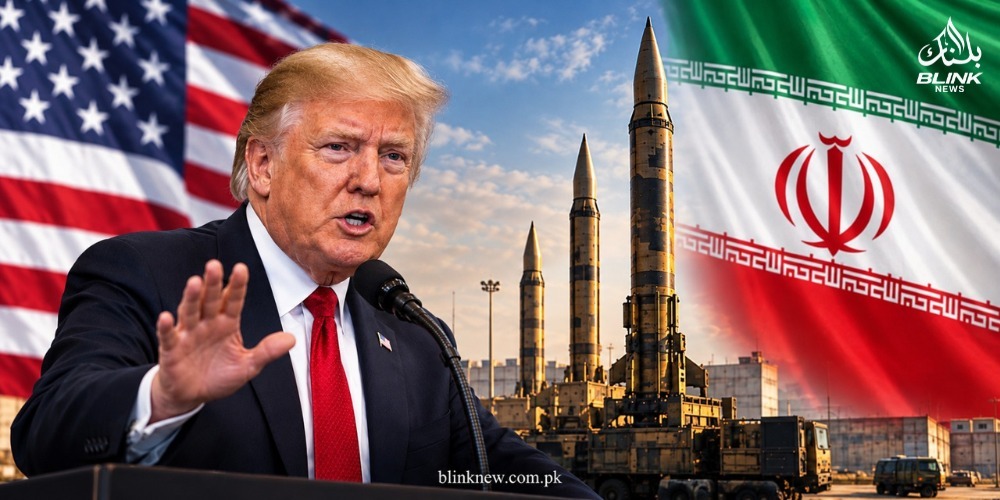
US President Donald Trump’s statement that the United States will not use nuclear weapons against Iran has brought renewed attention to tensions between Washington and Tehran. The issue carries significant international implications because any potential nuclear escalation in the Middle East could threaten regional security and have consequences far beyond the two countries.
The reported remarks come amid continuing concerns about US-Iran relations, military confrontation, Iran’s nuclear programme, and the possibility of further escalation. Trump’s position is particularly important because the United States maintains one of the world’s largest nuclear arsenals and plays a major role in international security.
However, the circumstances surrounding the statement, including its exact wording and timing, should be verified through an official White House transcript or a reliable news report. BlinkNews is following developments involving US foreign policy and the wider regional situation.
Trump Nuclear Weapons Against Iran: What the Statement Means
The statement that the United States will not use nuclear weapons against Iran signals a distinction between conventional military options and the use of nuclear arms. Nuclear weapons have destructive consequences far beyond those associated with conventional attacks, making their potential use one of the most serious concerns in international politics.
Trump’s reported position may reassure some observers concerned about the possibility of a nuclear confrontation. Nevertheless, a statement ruling out nuclear weapons does not automatically mean that all military options have been ruled out.
The United States could still pursue diplomatic measures, economic pressure, regional security cooperation, or conventional military strategies, depending on its policy objectives and developments on the ground.
For that reason, the wider context of Trump’s remarks is essential to understanding their implications for Iran and the Middle East.
Why US-Iran Tensions Remain a Global Concern
Relations between Washington and Tehran have been strained for decades. Disagreements over Iran’s nuclear programme, economic sanctions, regional influence, and security policy have repeatedly created diplomatic challenges.
Iran’s Nuclear Programme
Iran’s nuclear programme remains a central issue in relations with the United States and other international powers. Washington has raised concerns about the possibility of Iran developing nuclear weapons, while Tehran has maintained that its nuclear activities are intended for peaceful purposes.
International monitoring, diplomatic negotiations, and restrictions on nuclear-related activities have all played roles in efforts to address these concerns.
The 2015 nuclear agreement, formally known as the Joint Comprehensive Plan of Action (JCPOA), was designed to limit Iran’s nuclear activities in exchange for sanctions relief. The United States withdrew from the agreement in 2018 during Trump’s first presidency, creating further challenges for diplomatic engagement.
Developments since then have kept Iran’s nuclear programme at the centre of international discussions.
Military Pressure and Regional Security
The relationship between the two countries also involves broader security concerns, including regional military deployments, attacks involving allied groups, and the protection of shipping routes.
Any direct military confrontation between the United States and Iran could affect neighbouring countries and increase uncertainty across the Middle East. Energy markets, international trade, and civilian populations could face serious consequences if tensions escalated further.
The reported statement about nuclear weapons should therefore be considered alongside the broader diplomatic and military environment.
What Trump’s Position Could Mean for US Military Strategy
The United States has several instruments available when responding to international security challenges. These include diplomacy, sanctions, intelligence cooperation, defensive deployments, and conventional military capabilities.
Nuclear Deterrence and Conventional Options
Nuclear deterrence is based on the principle that the threat of devastating retaliation can discourage an adversary from launching a major attack. However, the existence of a nuclear arsenal does not mean that its use is the preferred response to every security challenge.
A decision not to use nuclear weapons against Iran would distinguish the nuclear threshold from other possible forms of pressure or military action. It would not, by itself, establish whether Washington intends to pursue negotiations, maintain sanctions, or consider conventional force.
The practical significance of Trump’s statement will depend on subsequent policy decisions, official announcements, and the actions of both countries.
The Importance of Diplomatic Channels
Diplomatic communication can help prevent misunderstandings and reduce the risk of an unintended military confrontation. Even when relations are hostile, negotiations and third-party mediation can create opportunities to manage disputes.
International organisations and governments concerned about Middle East stability may encourage Washington and Tehran to keep communication channels open.
Clear statements about military intentions can also influence how other countries assess the risks of escalation. However, lasting reassurance generally requires consistent policies and verifiable actions rather than statements alone.
International Reactions and Middle East Stability
Statements involving nuclear weapons attract international attention because their consequences could extend across borders. Countries in the Middle East have a direct interest in avoiding a conflict that could threaten civilian safety, infrastructure, trade, and energy supplies.
European governments and other international partners may also focus on preventing further escalation and preserving opportunities for diplomatic engagement.
For global markets, heightened tensions between the United States and Iran can create uncertainty around oil prices and shipping through strategically important waterways, including the Strait of Hormuz.
The response from Iran, US allies, and other regional governments will help shape the broader significance of Trump’s reported remarks. Until official statements and further developments are available, conclusions about the next stage of US policy should remain cautious.
What Happens Next in US-Iran Relations?
The next phase will depend on decisions made by the Trump administration and the Iranian leadership. Possible developments could include renewed diplomatic contacts, additional economic measures, security discussions, or continued disagreement over Iran’s nuclear programme.
Observers will also watch for official clarification of Trump’s statement and any indication of how it relates to the administration’s broader strategy.
The central question is whether the reported position will contribute to reducing fears of nuclear escalation or whether wider political and military tensions will continue.
BlinkNews will continue to monitor verified developments involving Donald Trump, Iran, and US foreign policy to help readers understand the implications for international security.
Conclusion
Trump’s reported statement that the United States will not use nuclear weapons against Iran has placed renewed focus on nuclear deterrence, military strategy, and regional stability. Although the position may ease some concerns about the possibility of nuclear escalation, it does not necessarily rule out other forms of pressure or conventional military action.
The future of US-Iran relations will depend on diplomatic efforts, security developments, and decisions made by both governments. Verified reporting and official statements remain essential to understanding the situation accurately.
Follow BlinkNews for further updates on Donald Trump, Iran, and major international political developments.