
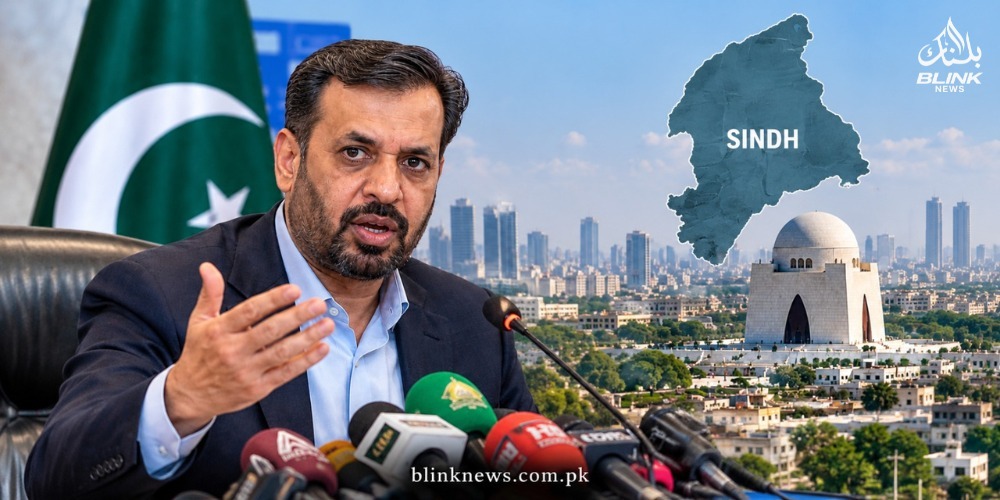
MQM-P leader Mustafa Kamal has highlighted the need for smaller administrative units as a possible solution to the governance challenges facing Sindh and Pakistan. The proposal focuses on improving public administration, bringing government services closer to citizens, and addressing the problems that arise when large administrative regions become difficult to manage.
The debate over small administrative units is closely linked to public service delivery, local government, and the distribution of resources. Supporters believe that a more decentralized administrative structure could help authorities respond to local needs more effectively. However, the proposal also raises questions about implementation, political consensus, and the division of administrative responsibilities.
For readers of BlinkNews, this issue is important because governance reforms can directly affect access to public services, urban development, and the daily lives of citizens.
What Did Mustafa Kamal Say About Small Administrative Units?
Mustafa Kamal’s position, as reflected in the topic of his statement, emphasizes the potential role of smaller administrative units in addressing problems in Sindh and across Pakistan.
The central argument behind this proposal is that managing large and diverse populations through centralized administrative systems can create delays and make it harder to address local concerns. Smaller units could allow administrators to focus on the specific requirements of individual communities.
These requirements may include improving roads, maintaining sanitation systems, expanding healthcare facilities, supporting education, and resolving municipal complaints.
However, the creation of smaller units would not automatically resolve these problems. Their effectiveness would depend on adequate funding, transparent decision-making, qualified staff, and clear accountability mechanisms.
Why Does Sindh Need Better Administrative Management?
Sindh contains major urban centres, rural communities, agricultural districts, and areas with different economic and infrastructure needs. Managing these diverse areas requires policies that respond to local circumstances.
Challenges in Urban Areas
Cities such as Karachi face complex issues involving transportation, water supply, waste management, housing, and infrastructure. Rapid population growth can put additional pressure on public services.
A more locally responsive administrative structure could help authorities identify neighbourhood-level problems and coordinate solutions. Smaller administrative units may also make it easier for residents to communicate with relevant officials.
Nevertheless, effective urban management would still require cooperation among municipal bodies, provincial departments, and other responsible institutions.
Problems in Rural Communities
Rural parts of Sindh face different development priorities, including access to schools, healthcare, clean drinking water, roads, and agricultural support.
When administrative offices are located far from smaller communities, residents may face additional costs and delays while seeking government assistance. Decentralized administration could reduce some of these difficulties if local offices receive sufficient authority and resources.
How Could Small Administrative Units Improve Governance?
The proposal for small administrative units is based on the idea that administrative responsibilities should be organized in a way that makes government more accessible and efficient.
1. Faster Public Service Delivery
Smaller administrative structures could help officials process local requests and complaints more efficiently. Residents might find it easier to contact the appropriate department instead of navigating multiple layers of administration.
2. Better Monitoring of Development Projects
Local administrators may be better positioned to monitor roads, schools, hospitals, drainage systems, and other public projects. Greater oversight could help identify delays and improve the use of public funds.
3. More Responsive Local Decision-Making
Different communities have different priorities. A local administration with clearly defined responsibilities could develop plans based on the needs of its population rather than relying entirely on decisions made at a distant provincial headquarters.
4. Greater Accountability
Smaller administrative units could make it easier for residents to identify the officials responsible for public services. However, this would require transparent budgets, accessible complaint systems, regular audits, and meaningful public participation.
Small Administrative Units and Pakistan’s Governance Debate
The discussion extends beyond Sindh. Pakistan has long faced debates about administrative efficiency, provincial governance, local government powers, and equitable development.
Supporters of administrative restructuring argue that smaller units could help authorities manage populations and public services more effectively. They also believe that local decision-making may improve the distribution of development resources.
However, administrative restructuring is a complex issue. Any proposal must account for constitutional provisions, legal procedures, financial implications, and the concerns of affected communities.
It is also important to distinguish between creating new administrative divisions and establishing new provinces. Administrative divisions can be reorganized through applicable government procedures, while changes to provincial boundaries involve constitutional requirements.
Therefore, policymakers would need to clarify exactly what form of smaller administrative units is being proposed before assessing its legal and practical implications.
What Challenges Could Arise?
Although smaller administrative units may offer potential benefits, they could also introduce new challenges.
Financial and Administrative Costs
Establishing additional offices and administrative structures may require more funding, personnel, infrastructure, and operational resources. Without careful planning, these costs could place further pressure on public finances.
Political Disagreements
Administrative boundaries can be politically sensitive. Communities may disagree over the location of administrative headquarters, the distribution of resources, and representation in decision-making bodies.
Risk of Ineffective Implementation
Creating new units without transferring meaningful authority or improving institutional capacity may produce little change. Effective reforms require clear responsibilities, trained staff, financial resources, and measurable performance standards.
What Should Policymakers Consider?
Any serious plan for smaller administrative units should begin with a detailed assessment of population size, geographical needs, infrastructure gaps, and the availability of public services.
Authorities should consult local communities, elected representatives, civil society, and relevant government departments before finalizing administrative changes.
They should also establish clear performance indicators to measure improvements in service delivery, project completion, complaint resolution, and the transparent use of public funds.
Such steps would help determine whether administrative restructuring delivers practical benefits instead of remaining a political proposal.
Conclusion
Mustafa Kamal’s emphasis on small administrative units highlights an important question about how Pakistan can improve governance and public service delivery. For Sindh, where urban and rural communities face different development challenges, a more responsive administrative system could offer potential advantages.
However, smaller units alone cannot solve every governance problem. Their success would depend on sound planning, adequate resources, legal clarity, accountability, and cooperation between government institutions.
As the discussion continues, BlinkNews readers should watch for further statements, official proposals, and policy developments that clarify how such reforms could be implemented in Sindh and elsewhere in Pakistan.