
Introduction
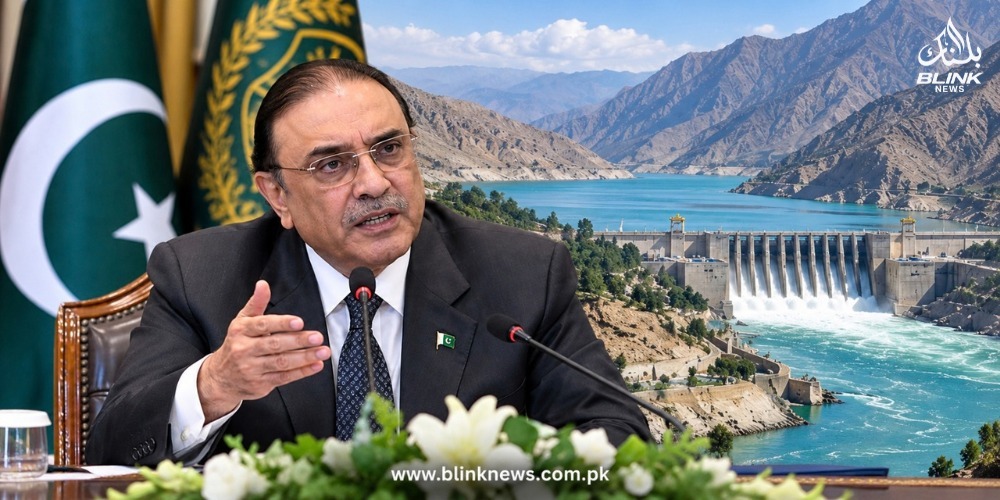
President Asif Ali Zardari has stressed that water must not be used as a weapon or as a tool of political pressure, highlighting the importance of fair, peaceful and responsible management of water resources. His remarks underline the growing significance of water security for Pakistan amid increasing pressure on natural resources.
Water is essential for Pakistan’s agriculture, energy production, drinking needs and overall economic stability. Any dispute involving water distribution can therefore have consequences far beyond politics.
President Zardari’s position reflects the need for cooperation among stakeholders and responsible management of shared water resources. The statement comes as water availability and distribution continue to remain important issues in Pakistan.
BlinkNews is following the latest developments in Pakistan, including important statements from the country’s political leadership and discussions concerning national resources.
Zardari Calls for Responsible Water Management
The Asif Ali Zardari water statement emphasizes that water should remain a shared resource rather than becoming a means of political confrontation. The president’s message points toward dialogue and cooperation when dealing with disagreements over water.
Pakistan’s provinces depend heavily on reliable water supplies for agriculture and other economic activities. Differences over distribution can create political tensions, making transparent coordination particularly important.
A cooperative approach can help ensure that water resources are managed according to established mechanisms while protecting the interests of different regions.
Water Security Is Critical for Pakistan
Pakistan is highly dependent on water for its agricultural economy. Millions of farmers rely on irrigation networks to grow crops and support rural livelihoods.
Water is also important for hydropower generation, industrial activity and household consumption. Changes in rainfall patterns, population growth and climate-related challenges are putting additional pressure on available resources.
The Asif Ali Zardari water statement therefore carries significance beyond an immediate political discussion. It highlights a broader national challenge involving conservation, distribution and long-term water planning.
Impact on Agriculture
Agriculture remains one of the most water-dependent sectors of Pakistan’s economy. Insufficient or unpredictable water supplies can affect crop production, food security and farmers’ incomes.
Effective irrigation management and better water conservation can reduce some of these risks. Authorities also need to focus on reducing wastage and improving the efficiency of existing irrigation infrastructure.
Water Should Not Become a Political Weapon
The president’s warning against using water as a weapon or tool of political pressure reflects the sensitive nature of water disputes.
Political disagreements over water can affect relations between provinces and communities. If water becomes part of political competition, it can make constructive negotiations more difficult.
A stable water-management system requires institutions, technical assessments and consultation rather than political pressure. Transparent data and established allocation mechanisms can also help reduce misunderstandings.
Importance of Inter-Provincial Coordination
Pakistan’s water resources are shared across provincial boundaries, making coordination essential. Different provinces have different agricultural requirements, population levels and geographic conditions.
Regular communication between federal and provincial authorities can help address concerns before they develop into larger disputes.
Cooperation is particularly important during periods of water shortages, when competing demands can increase pressure on the country’s water-management system.
Indus River System Remains Central
The Indus River system is fundamental to Pakistan’s water supply. Its rivers and irrigation networks support agriculture, communities and economic activity across large parts of the country.
Managing this system requires careful planning and coordination. Water availability can vary significantly depending on rainfall, snowmelt, reservoir levels and seasonal conditions.
Long-term planning is therefore necessary to protect water supplies and ensure that the country’s agricultural and economic needs can be met.
Climate Change Adds to Water Challenges
Climate change has made water management increasingly complex. Changes in precipitation, rising temperatures, glacier conditions and extreme weather events can influence water availability.
Pakistan faces both water scarcity and periods of excessive rainfall. This makes better storage, conservation and infrastructure particularly important.
The Asif Ali Zardari water statement can be viewed within this wider context, where responsible water management is becoming increasingly important for national resilience.
Need for Long-Term Water Policy
Pakistan needs a long-term approach that combines water conservation, infrastructure development, efficient irrigation and improved governance.
Modern irrigation techniques can help farmers reduce water consumption while maintaining agricultural productivity. Similarly, improved storage and distribution systems can help minimize losses.
Public awareness is also important. Households, businesses and farmers all have a role in reducing unnecessary water use.
Protecting National Water Security
Water security should be treated as a national priority rather than solely as a provincial or political issue. A coordinated approach can help Pakistan manage growing demand while protecting essential resources.
The Asif Ali Zardari water statement reinforces the principle that water management should be based on cooperation and responsible governance.
Conclusion
President Asif Ali Zardari’s remarks that water must not be used as a weapon or tool of political pressure highlight the importance of cooperation in managing Pakistan’s most vital natural resources.
With agriculture, energy and millions of livelihoods dependent on reliable water supplies, disputes require dialogue rather than confrontation. Better coordination, efficient irrigation, conservation and long-term planning can strengthen Pakistan’s water security.
As water challenges grow because of population pressures and climate change, responsible management will remain essential. BlinkNews will continue to monitor developments and statements concerning Pakistan’s water resources and national policy.