
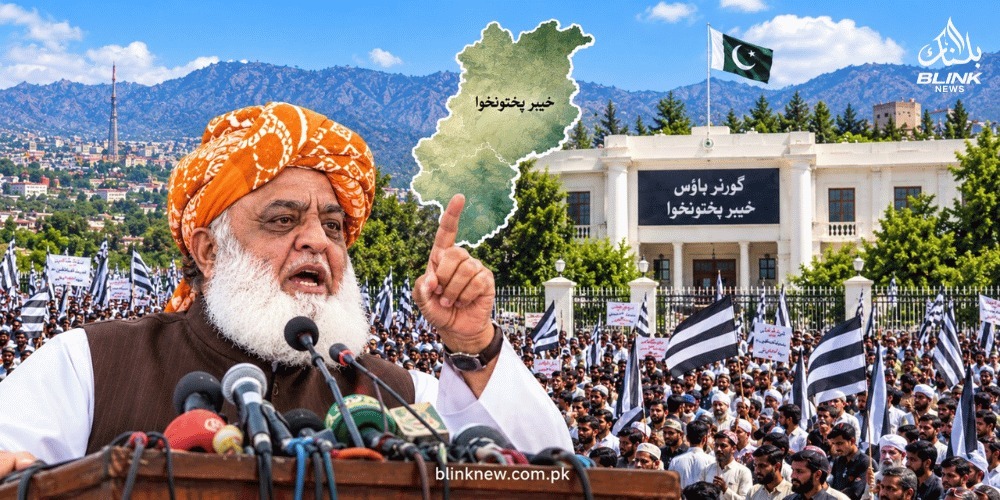
Maulana Fazlur Rehman, chief of Jamiat Ulema-e-Islam Fazl (JUI-F), has rejected proposals for imposing an emergency or governor rule in Khyber Pakhtunkhwa (KP). His position adds to the political debate over the province’s administration, security situation and relationship with the federal government.
The issue of Maulana Fazlur Rehman Governor Rule has drawn attention amid ongoing political differences in Pakistan. Any move to change the province’s administrative arrangements would carry significant constitutional and political implications.
The debate also highlights concerns about provincial autonomy, democratic institutions and the need for political consultation. BlinkNews is following developments related to the statement and the broader political situation in Khyber Pakhtunkhwa.
Maulana Fazlur Rehman Opposes Governor Rule in KP
Maulana Fazlur Rehman has rejected the idea of imposing governor rule in Khyber Pakhtunkhwa, according to the reported announcement. His position places him against a measure that could significantly alter the province’s current system of governance.
Governor rule is a sensitive political issue because it can affect the authority of an elected provincial government. Any proposal involving such a step can trigger debate among political parties, constitutional experts and elected representatives.
Fazlur Rehman has remained an important figure in Pakistan’s political landscape through his leadership of JUI-F. His views on provincial matters can contribute to discussions involving opposition parties, the federal government and provincial political leadership.
Why Emergency and Governor Rule Are Controversial
An emergency and governor rule are not interchangeable terms. Each involves different constitutional considerations, legal procedures and potential consequences for government institutions.
The idea of imposing an emergency generally raises questions about public safety, security and the constitutional conditions required for exceptional measures. Governor rule, meanwhile, concerns the administration of a province under specific constitutional circumstances.
Constitutional and Legal Considerations
Pakistan’s Constitution establishes the framework for relations between the federal government and the provinces. Article 234 addresses situations in which a provincial government cannot be carried on in accordance with the Constitution.
Any action under this framework must be assessed against the applicable constitutional requirements and legal procedures. Political disagreement alone should not be confused with the constitutional conditions required for extraordinary intervention.
This distinction is important when evaluating proposals concerning the Maulana Fazlur Rehman Governor Rule debate. Public statements and political demands do not, by themselves, establish that the legal requirements for governor rule have been met.
Impact on Provincial Autonomy
Provincial autonomy is a central issue in Pakistan’s federal system. Elected provincial governments exercise authority over matters assigned to them under the Constitution.
A proposal to impose governor rule can therefore generate concerns about democratic representation and the balance of power between Islamabad and provincial institutions.
Political parties may disagree over the performance of a provincial administration, but any proposed intervention must be considered within the constitutional framework.
Political Situation in Khyber Pakhtunkhwa
Khyber Pakhtunkhwa remains an important province in Pakistan’s political and security landscape. Decisions affecting its government can have consequences for provincial administration, political stability and relations with federal authorities.
Political disagreements between parties can make cooperation more difficult, particularly when questions of governance and security become part of the national debate.
Fazlur Rehman’s rejection of emergency and governor rule adds another voice to this discussion. However, the practical consequences of his position will depend on subsequent statements, consultations and decisions by the relevant political and constitutional authorities.
For residents of the province, stable administration and effective public services remain important priorities regardless of political differences.
JUI-F’s Role in Pakistan’s Political Debate
Jamiat Ulema-e-Islam Fazl is an established political party led by Maulana Fazlur Rehman. The party has participated in national politics, parliamentary debates and political negotiations involving different parties.
The JUI-F chief’s position on governor rule could become relevant to discussions among political stakeholders about the future of provincial governance. His statement may also contribute to wider debate about how disagreements between governments should be resolved.
Political consultation can provide an opportunity for parties to address concerns without escalating tensions. Dialogue between provincial leaders, opposition representatives and federal authorities can help clarify disagreements and identify constitutional solutions.
What Could Happen Next?
The next stage of the debate will depend on whether government officials or political leaders issue further statements about emergency measures or governor rule in Khyber Pakhtunkhwa.
Several issues are likely to remain central to the discussion:
- The constitutional basis for any proposed administrative intervention.
- The position of the KP provincial government and opposition parties.
- The response of federal authorities and other political stakeholders.
- The role of parliamentary debate and political consultation.
- The potential effects on provincial administration and political stability.
These are areas to watch rather than confirmed outcomes. Without further official announcements, it would be premature to conclude that governor rule or an emergency will be imposed.
Conclusion
Maulana Fazlur Rehman’s rejection of emergency and governor rule in Khyber Pakhtunkhwa has added to Pakistan’s ongoing debate over provincial governance and constitutional authority. His position highlights the political sensitivity surrounding any proposal that could affect an elected provincial administration.
The Maulana Fazlur Rehman Governor Rule issue will require close attention to official statements, constitutional requirements and developments among political parties. The situation’s direction remains dependent on decisions by the relevant authorities.
BlinkNews will continue covering significant developments in Pakistan politics, including statements from JUI-F leadership, responses from government officials and any confirmed changes affecting Khyber Pakhtunkhwa.