
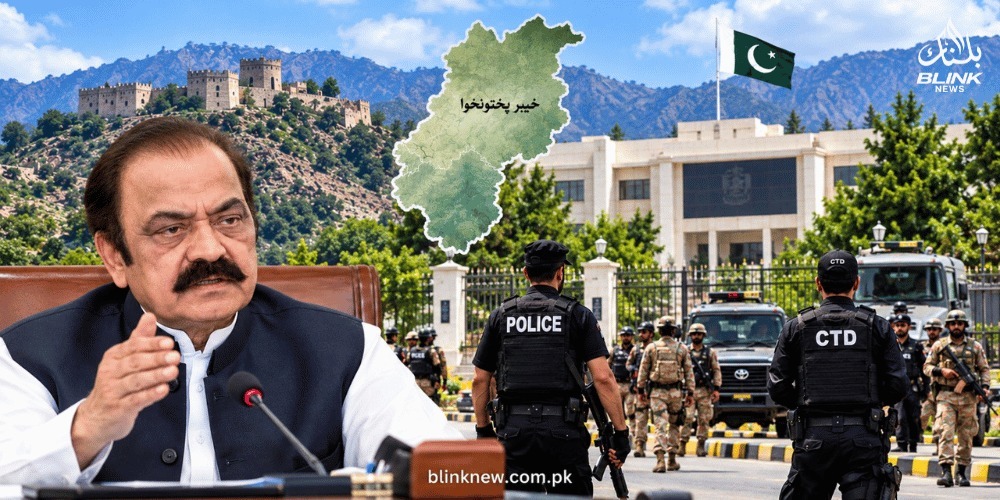
Pakistan’s security framework in Khyber Pakhtunkhwa is set to receive renewed attention following a statement by Rana Sanaullah that the police, Counter Terrorism Department (CTD) and civil administration in the province will be made more effective. The announcement highlights the importance of improving law enforcement capabilities and strengthening administrative coordination in a region facing persistent security challenges.
The Rana Sanaullah Khyber Pakhtunkhwa Police statement focuses on the institutions responsible for maintaining public order, responding to security threats and protecting residents. Making these departments more effective could involve better coordination, improved operational capacity and stronger administrative support.
However, the practical impact will depend on the specific measures introduced and how effectively they are implemented across the province.
Rana Sanaullah Emphasizes Stronger Security Institutions
Rana Sanaullah’s statement places police performance, counter-terrorism operations and civil administration at the center of the provincial security discussion.
Khyber Pakhtunkhwa occupies a strategically important position because of its geographic location and longstanding security concerns. Law enforcement agencies in the province must respond to a range of challenges, including terrorism, attacks on security personnel and threats to public safety.
Strengthening these institutions is therefore an important part of efforts to maintain stability and improve public confidence.
The proposed direction also highlights the need for security agencies to work together rather than operate in isolation. Effective coordination can help authorities share information, respond quickly to incidents and manage complex security situations.
Why Khyber Pakhtunkhwa Police Reforms Matter
The provincial police serve as the first line of response to many security incidents. Their responsibilities include crime prevention, investigations, public order and protecting citizens.
Improving police effectiveness requires more than increasing personnel numbers. Training, modern equipment, intelligence-sharing systems and professional accountability can all contribute to better performance.
Improving Operational Capacity
Police officers need appropriate resources and training to handle evolving security threats. Better investigation techniques, communication systems and access to reliable intelligence can improve their ability to prevent crimes and respond to emergencies.
Coordination between police stations, district-level officers and specialized security units is also essential. When information moves quickly between departments, authorities can make more informed decisions.
The Rana Sanaullah Khyber Pakhtunkhwa Police announcement draws attention to the broader question of how provincial law enforcement can become more capable and responsive.
Building Public Trust
Public cooperation is an important part of effective policing. Residents are more likely to report suspicious activities and assist investigations when they trust law enforcement agencies.
Transparent procedures, timely responses to complaints and professional conduct can help strengthen that relationship.
Reforms should therefore focus not only on security operations but also on protecting citizens’ rights and ensuring that policing remains accountable.
Strengthening the Counter Terrorism Department
The Counter Terrorism Department plays a specialized role in identifying and responding to terrorism-related threats. Its responsibilities include intelligence-led investigations, identifying suspected militant networks and supporting counter-terrorism operations.
In Khyber Pakhtunkhwa, the department’s effectiveness is particularly important because security threats can require specialized expertise and coordinated responses.
Better Intelligence and Coordination
A stronger CTD requires trained investigators, modern forensic capabilities and reliable intelligence-sharing arrangements. Coordination with local police and other relevant agencies can help authorities identify threats before they develop into serious incidents.
Information gathered at the local level can be valuable when assessed alongside intelligence from specialized units. Clear communication channels can also reduce delays during urgent operations.
Any improvements should be accompanied by appropriate oversight to ensure that counter-terrorism activities follow the law and respect fundamental rights.
Making Civil Administration More Effective
Security is not determined by law enforcement alone. Civil administration also plays an important role in maintaining stability, managing public services and coordinating government responses during emergencies.
District administrations are often responsible for implementing government decisions, supporting disaster response and addressing public complaints. Their performance can directly influence how effectively security-related policies are carried out.
Coordination Between Departments
Closer coordination among police, CTD officials and civil administration can improve responses to emergencies and local security concerns.
District officials need clear responsibilities, timely information and effective communication with provincial authorities. These arrangements can help prevent confusion when multiple departments must respond to the same incident.
The Rana Sanaullah Khyber Pakhtunkhwa Police statement therefore raises a wider administrative issue: improving the effectiveness of security institutions requires cooperation across the provincial government.
Challenges in Implementing Security Improvements
Turning policy statements into measurable results can be difficult. Security agencies may face resource constraints, staffing shortages, training requirements and complicated operational conditions.
Authorities must also ensure that reforms reach districts with different needs and security conditions. A uniform approach may not address every local challenge equally well.
Regular performance reviews can help identify weaknesses and determine whether new measures are delivering results. Useful indicators could include response times, investigation quality, successful prevention efforts and public complaint resolution.
Coordination should also include clear accountability so that each department understands its responsibilities.
What the Announcement Means for Residents
For residents of Khyber Pakhtunkhwa, stronger security institutions could mean improved responses to threats, more effective investigations and better coordination during emergencies.
Businesses, educational institutions and local communities also benefit when public safety improves and government services operate reliably.
Nevertheless, the announcement should not be interpreted as confirmation that specific reforms have already been completed. Their impact will depend on the policies adopted, resources provided and progress achieved over time.
BlinkNews will continue covering developments related to Pakistan’s security policy, provincial administration and law enforcement institutions.
Conclusion
Rana Sanaullah’s statement about making the police, CTD and civil administration more effective in Khyber Pakhtunkhwa highlights the importance of institutional capacity and coordination in addressing security challenges.
Better training, stronger intelligence-sharing, professional accountability and improved administrative performance could contribute to safer communities across the province.
The key question now is how the stated objective will translate into practical measures. Clear implementation plans, adequate resources and measurable results will be essential to determining whether these efforts produce lasting improvements in public safety.