
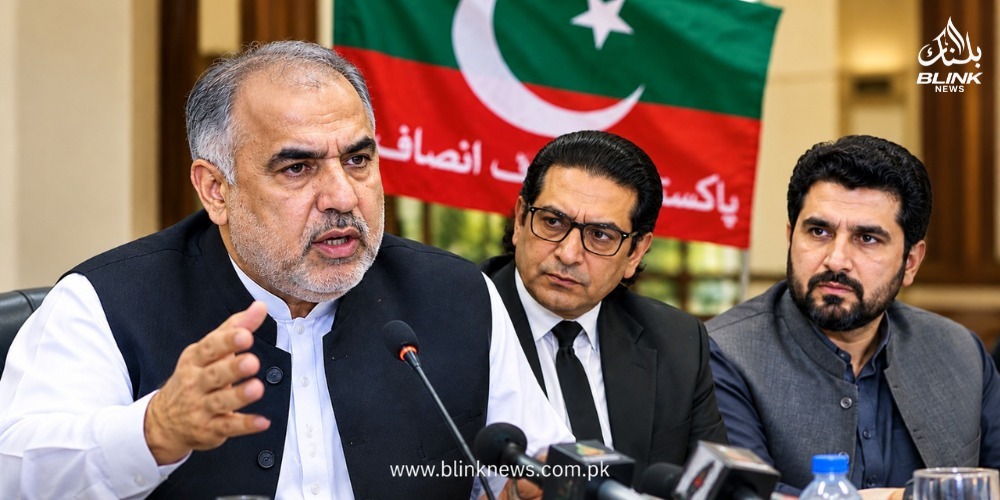
Pakistan Tehreek-e-Insaf (PTI) leader Asad Qaiser has clarified that Salman Akram Raja did not hold Sohail Afridi responsible for the party’s failure during a core committee meeting. His remarks bring attention to discussions within PTI leadership and the importance of accurately understanding statements made during internal party meetings.
The clarification is relevant to Pakistan’s evolving political landscape, particularly as PTI continues to discuss its political strategy, leadership responsibilities, and future course of action. The statement also highlights the need to distinguish between internal deliberations and claims circulating in political discussions.
BlinkNews is covering the development to help readers understand what Asad Qaiser said and why the clarification matters for PTI.
Asad Qaiser Clarifies Salman Akram Raja’s Position
According to the reported statement, Asad Qaiser said Salman Akram Raja did not blame Sohail Afridi for the failure discussed during the PTI core committee meeting.
The clarification addresses the question of whether Raja directly held Afridi responsible for the outcome. Qaiser’s remarks suggest that the discussion should not be interpreted as a direct accusation against the PTI leader.
Political meetings often involve discussions about performance, strategy, leadership decisions, and the challenges faced by a party. However, the meaning of these discussions can change when individual comments are reported without their full context.
Qaiser’s statement therefore draws attention to the importance of understanding what was actually said during the meeting before reaching conclusions about disagreements within the party.
What Happened During the PTI Core Committee Meeting?
The PTI core committee plays an important role in discussing political priorities and organizational matters. Such meetings can provide a platform for party leaders to review developments, assess challenges, and consider possible responses to the government’s policies.
The reported discussion involving Salman Akram Raja and Sohail Afridi has attracted attention because it concerns responsibility for a political setback.
However, the available statement does not establish the precise circumstances behind the failure being discussed. It would therefore be premature to attribute a specific outcome or decision to any individual without further verified information.
Why the Clarification Matters
Statements about internal party meetings can influence public perceptions of political leadership. If a leader is portrayed as having blamed another member, the report may create an impression of disagreement or conflict.
Asad Qaiser’s clarification provides an important distinction: Salman Akram Raja was not said to have held Sohail Afridi responsible, according to Qaiser’s account.
This does not necessarily reveal every detail of the meeting, but it helps prevent the reported discussion from being interpreted as a confirmed personal accusation.
Who Are the Key PTI Leaders Involved?
Asad Qaiser
Asad Qaiser is a senior PTI leader and former speaker of Pakistan’s National Assembly. His political statements can attract attention because of his position within the party and his experience in parliamentary affairs.
In this instance, his reported remarks focus on clarifying another leader’s position rather than confirming a direct dispute between party members.
Salman Akram Raja
Salman Akram Raja is a lawyer and political figure associated with PTI. His name has featured in discussions concerning the party’s legal and political activities.
The central point of the reported development is whether Raja blamed Sohail Afridi during the core committee meeting. According to Asad Qaiser’s statement, he did not.
Sohail Afridi
Sohail Afridi is associated with PTI politics in Khyber Pakhtunkhwa. Discussions about his role and political responsibilities are relevant to the party’s provincial organization and broader political strategy.
Nevertheless, the reported clarification does not establish that Afridi was formally held responsible for a particular setback.
Implications for PTI’s Political Strategy
The clarification comes amid continuing political challenges for PTI, including questions about party coordination, leadership decisions, and its approach to national and provincial politics.
For political organizations, internal discussions can help identify weaknesses and improve decision-making. They can also generate speculation when details emerge without sufficient context.
The issue involving Asad Qaiser, Salman Akram Raja, and Sohail Afridi demonstrates why careful reporting matters. A discussion about political performance should not automatically be treated as evidence of a personal dispute.
PTI’s future decisions, public statements, and responses from the leaders involved may provide further clarity about the meeting and its significance.
What Happens Next?
Further verified statements from PTI leadership could clarify the background of the core committee discussion and the failure referenced in the report.
Until additional details become available, readers should distinguish between Asad Qaiser’s reported clarification and broader speculation about internal party differences.
Political developments in Pakistan can change quickly, making reliable reporting particularly important when statements concern party leadership and accountability.
Conclusion
Asad Qaiser’s clarification that Salman Akram Raja did not blame Sohail Afridi during the PTI core committee meeting offers an important detail in the latest political discussion. The statement challenges interpretations that present the meeting as a confirmed accusation against Afridi.
Although the wider context of the reported failure remains unclear, the clarification emphasizes the importance of accurate reporting and careful interpretation of political statements.
BlinkNews will continue to follow developments involving PTI leadership, Khyber Pakhtunkhwa politics, and Pakistan’s wider political landscape as further verified information emerges.