
Introduction
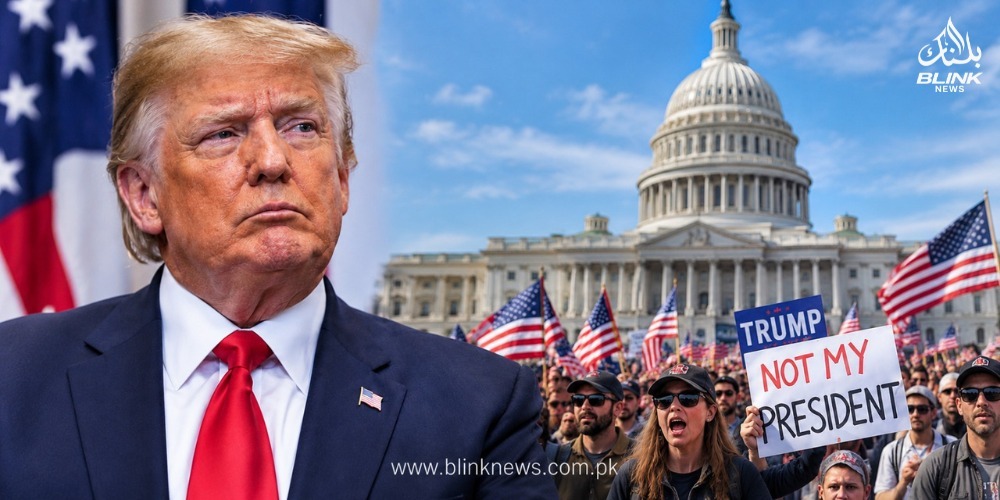
A new poll cited in the headline suggests that 66% of Americans are dissatisfied with President Donald Trump’s performance, while only 31% approve of his work in office. If confirmed by the full survey results, the figures would indicate that a substantial share of the American public remains unhappy with the president’s leadership.
The reported findings put the Trump approval rating poll in focus as political observers assess public confidence in the administration, the impact of government policies, and the concerns influencing voters across the United States.
Public approval ratings are an important measure of how Americans view a president’s performance. They can also offer insight into the political challenges facing an administration as it works to implement its agenda.
BlinkNews examines what the reported numbers could mean, why presidential approval matters, and which factors may influence public opinion.
What the Poll Says About Trump’s Performance
According to the supplied headline, 66% of Americans are dissatisfied with Trump’s performance, compared with 31% who approve. These figures suggest a clear difference between the number of respondents expressing dissatisfaction and those supporting his performance.
The remaining percentage cannot automatically be classified as undecided or neutral without reviewing the poll’s full results. Some surveys include options such as neither approve nor disapprove, while others allow respondents to express no opinion.
The survey’s sponsor, fieldwork dates, sample size, and methodology are also important for understanding the findings.
Understanding the Approval Numbers
Presidential approval ratings generally measure whether respondents approve or disapprove of the way a president is handling the job. Pollsters may also ask separate questions about specific issues, including the economy, immigration, foreign policy, and national security.
The reported figures suggest that dissatisfaction is considerably higher than approval. However, a single poll does not necessarily establish a long-term trend.
To understand whether public sentiment is changing, analysts usually compare several surveys conducted over time and examine whether their results point in the same direction.
Why Trump’s Approval Rating Matters
The Trump approval rating poll matters because public opinion can influence the political environment in which a president operates. Approval ratings do not directly determine government policy, but they can affect how political leaders communicate with voters and prepare for upcoming elections.
Low approval numbers may encourage opposition parties to challenge an administration’s decisions more aggressively. They may also prompt members of the president’s own party to reconsider how particular policies are presented to the public.
Higher approval ratings, by contrast, can provide political leaders with greater confidence when promoting their priorities.
The Impact on Future Elections
Public satisfaction can become especially important before congressional elections and other major political contests. Candidates often use presidential approval figures to assess the broader political climate and determine which issues deserve greater attention.
If dissatisfaction remains widespread across multiple independent surveys, it could create difficulties for candidates closely associated with the administration.
However, election outcomes depend on more than presidential approval. Local issues, candidate quality, voter turnout, campaign spending, and the distribution of support across electoral districts can all influence results.
Economic Concerns and Government Policies
Economic conditions are often central to how Americans evaluate presidential performance. Household expenses, employment opportunities, housing costs, wages, and confidence in the broader economy can shape voters’ views of the government.
When people feel that living costs are rising faster than their incomes, they may become more critical of the administration. On the other hand, improvements in employment, wages, or household financial conditions can strengthen public confidence.
These factors are relevant when interpreting the reported dissatisfaction with Trump, but the headline alone does not establish why respondents hold their views.
Immigration and Foreign Policy
Immigration, border security, international relations, and national security can also influence presidential approval. These issues often generate different responses among voters depending on their political preferences, personal experiences, and policy priorities.
Some Americans may support the administration’s approach to immigration or foreign affairs, while others may oppose it. A national approval figure combines these varied perspectives into a broad measure.
A more detailed survey would be needed to identify which policies contributed most to the reported result.
Political Divisions Across the United States
American politics remains strongly influenced by differences between Republicans, Democrats, and independent voters. These groups can assess the same presidential decision in very different ways.
Party affiliation is therefore an important consideration when interpreting national polling results. A president may maintain strong support among core supporters while facing greater criticism from voters outside that group.
The overall approval figure does not reveal how opinions differ by party, age, region, income, or education. Those details require access to the complete poll.
For BlinkNews readers, this distinction is important because national averages can hide meaningful differences within the electorate.
How Reliable Are Presidential Opinion Polls?
Opinion polls provide useful snapshots of public sentiment, but their results should be interpreted carefully. Different polling organizations may produce different estimates because they use different samples, question wording, survey methods, and weighting procedures.
Readers should check who conducted the survey, when respondents were interviewed, how many people participated, and whether the sample represents the adult population or registered or likely voters.
The margin of sampling error is another useful measure, although it does not account for every possible source of survey bias.
Comparing multiple reputable polls can provide a clearer picture than relying on a single result. Until the original survey details are available, the reported figures should be treated as headline claims rather than a complete assessment of national opinion.
Conclusion
The reported finding that 66% of Americans are dissatisfied with Donald Trump’s performance while 31% approve points to a potentially challenging public-opinion landscape for the president. However, the significance of the numbers depends on the survey’s source, methodology, timing, and consistency with other polling results.
The Trump approval rating poll may offer an important starting point for understanding American attitudes toward presidential leadership, but additional evidence is needed to explain the reasons behind the reported dissatisfaction.
BlinkNews will continue to cover developments in US politics, public opinion, and government policy, helping readers understand the issues shaping the political debate.