
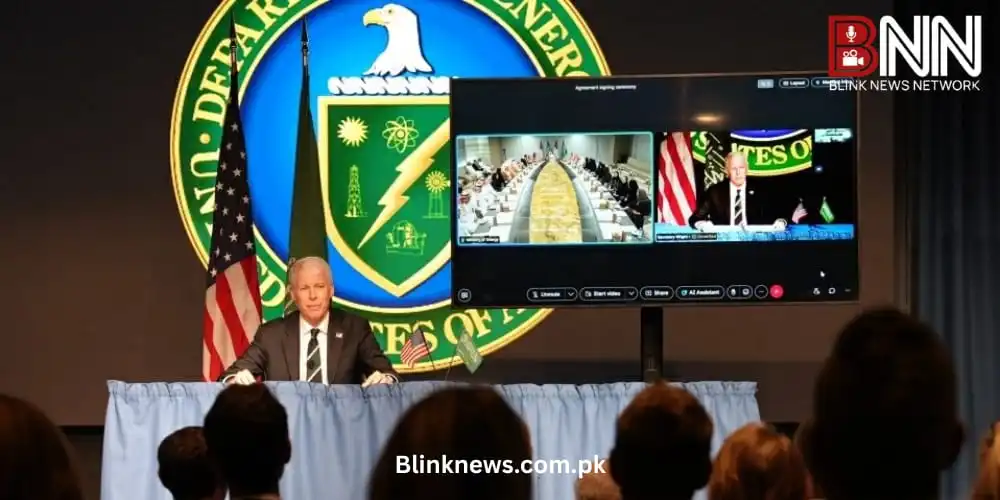
The United States and Saudi Arabia have signed a landmark civil nuclear cooperation agreement that marks a major milestone in bilateral relations and could reshape the strategic landscape of the Middle East. The deal establishes a framework for long-term cooperation on peaceful nuclear energy while opening the possibility for Saudi Arabia to develop uranium enrichment capabilities under agreed safeguards.
The agreement, signed by U.S. Energy Secretary Chris Wright and Saudi Energy Minister Prince Abdulaziz bin Salman, is based on a 30-year “123 Agreement,” the legal framework required for U.S. civilian nuclear cooperation with foreign nations. The accord also includes a bilateral safeguards agreement aimed at supporting nuclear safety and non-proliferation.
According to U.S. officials, the partnership will allow American companies to play a leading role in Saudi Arabia’s emerging nuclear energy sector, supporting billions of dollars in potential investments while helping the kingdom diversify its energy mix beyond oil. The agreement is also seen as a strategic effort to strengthen U.S. influence in the Gulf and limit opportunities for rivals such as China and Russia in the region’s nuclear market.
However, the agreement has sparked criticism from lawmakers and nuclear non-proliferation experts. Critics argue that allowing Saudi Arabia a pathway to domestic uranium enrichment could increase proliferation risks and fuel a regional arms race, particularly amid ongoing tensions over Iran’s nuclear program. Some have also expressed concern that the deal does not require the highest level of international inspection standards used in previous agreements.
The agreement will now undergo congressional review before taking full effect. If approved, it is expected to become one of the most significant U.S.-Saudi strategic agreements in decades, strengthening economic ties while raising important questions about regional security and the future of nuclear governance in the Middle East.