
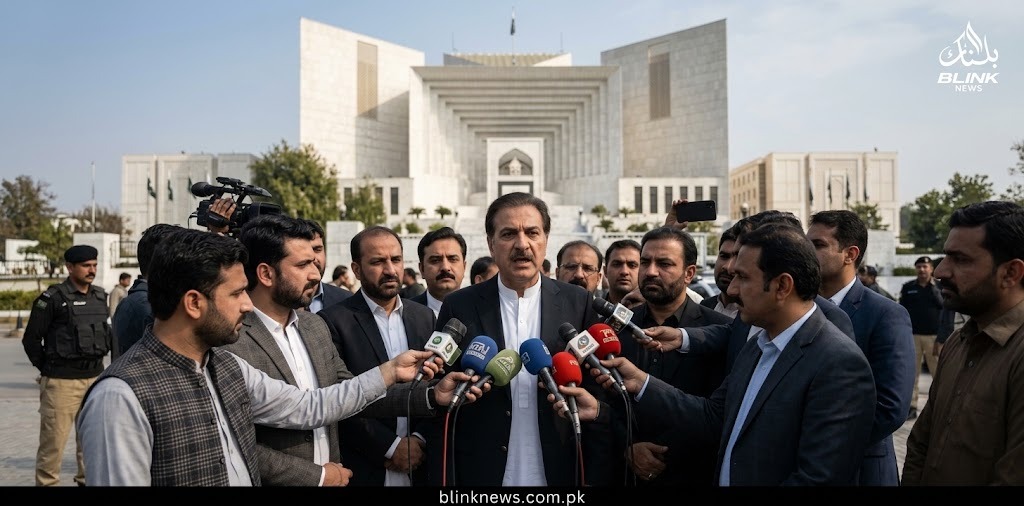
Pakistan Tehreek-e-Insaf (PTI) Chairman Barrister Gohar Ali Khan has warned against making hasty decisions on the creation of new provinces, stressing that any such move should be based on broad political and public consensus.
Speaking to reporters outside the Supreme Court, Gohar said dividing an existing province without the consent of its people and elected representatives could create further political tensions and undermine national unity.
The PTI leader called for a comprehensive consultation process before any decision is taken on the sensitive issue. He suggested that a commission could be established to examine proposals for new provinces and assess their political, administrative and constitutional implications.
Gohar maintained that major constitutional changes should be discussed in parliament and agreed upon through consensus among political parties and stakeholders. He referred to the 18th Constitutional Amendment as an example of a major constitutional development achieved through extensive political consultation.
He warned that attempting to redraw provincial boundaries without sufficient consultation could weaken the federation rather than improve governance.
The debate over the creation of new provinces has once again gained momentum in Pakistan, particularly over proposals concerning Sindh and other regions. Supporters argue that smaller provinces could improve administration, service delivery and political representation, while opponents fear that dividing provinces without consensus could intensify ethnic and political divisions.
Opposition figures have also questioned the timing and manner in which the issue is being raised, arguing that parliament and provincial assemblies should play a central role in any discussion involving changes to provincial boundaries.
Under Pakistan’s Constitution, the creation or alteration of provincial boundaries requires a complex constitutional process, including approval by the relevant provincial assembly and parliament.
PTI’s latest stance indicates that the party will resist any attempt to rush legislation on new provinces and will instead push for wider consultation, constitutional safeguards and the consent of affected communities.
The issue is likely to remain a significant political debate as parties weigh administrative demands against concerns over national and provincial unity.