
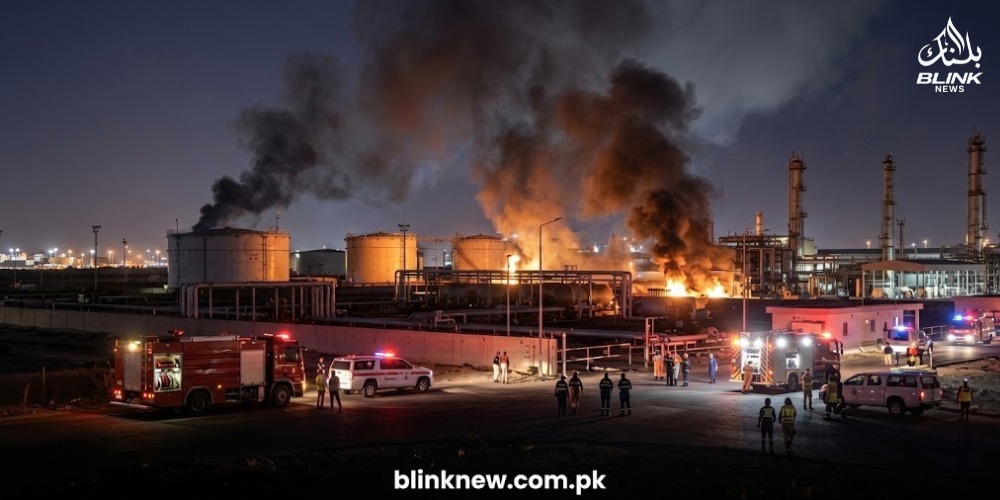
The Middle East conflict intensified sharply on Tuesday as Iran-backed Houthi forces launched a major wave of drone and missile attacks on southern Saudi Arabia, while Iran targeted a US military base in Jordan following escalating strikes between Tehran and Washington.
The Houthis said they struck four Saudi cities Khamis Mushait, Abha, Najran and Jizan — targeting a military airbase and facilities linked to Saudi state oil giant Aramco. Saudi authorities said the attacks wounded 73 people, including women and children, while fires broke out at several oil installations.
Satellite imagery showed heavy smoke rising from the Jizan refinery and an oil distribution facility in Abha, highlighting the potential threat to regional energy infrastructure.
The attacks came as the United States said it had destroyed five Iranian crude-oil tankers. Washington described the strikes as retaliation for attacks by Iran’s Islamic Revolutionary Guard Corps on a US Navy warship.
Iran subsequently launched ballistic missiles toward a US military base near Al Azraq in eastern Jordan. Jordan said its forces intercepted most of the incoming missiles, with no immediate casualties reported.
The rapidly widening conflict is raising fears that fighting could spread further across the Gulf and Red Sea. Saudi Arabia has warned that it will take necessary measures to defend its sovereignty, while the Houthis have threatened further operations.
The escalation is also putting renewed pressure on global energy markets. Brent crude prices moved sharply higher as traders assessed the risks to oil production, exports and shipping routes, particularly around the strategically vital Strait of Hormuz.
With Iran, the United States, Saudi Arabia and Iran-aligned armed groups increasingly drawn into direct confrontation, concerns are mounting that the conflict could trigger a broader regional crisis.