
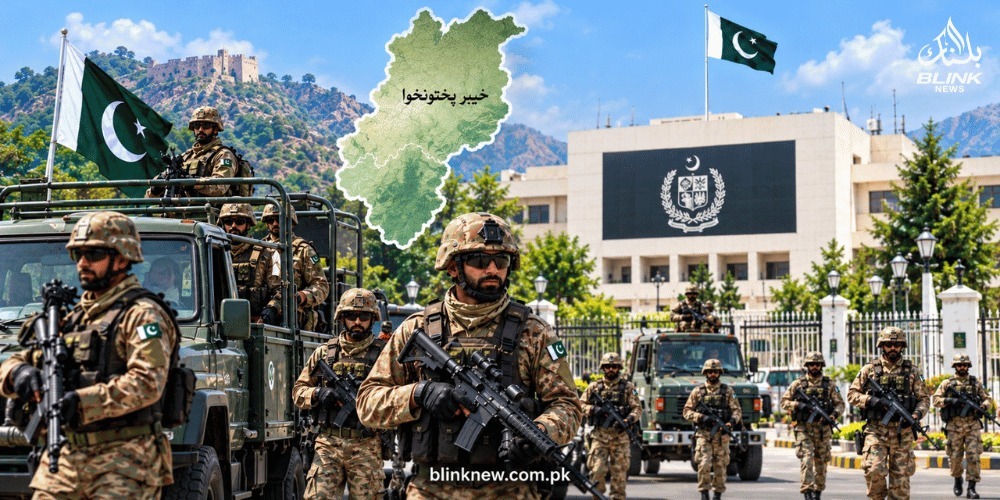
The federal government has reportedly deployed the Pakistan Army in Khyber Pakhtunkhwa (KP), bringing renewed attention to the province’s security situation and coordination between federal and provincial authorities.
The development is significant because Khyber Pakhtunkhwa has faced persistent security challenges in several areas. Any decision involving military deployment can have implications for public safety, administrative coordination and efforts to maintain law and order.
However, details such as the locations covered, the number of personnel deployed, the duration of the deployment and the specific operational mandate need to be confirmed through official statements. BlinkNews will continue to monitor verified updates as more information becomes available.
Federal Government’s Decision to Deploy the Army in KP
The reported decision to deploy the army in Khyber Pakhtunkhwa has placed the role of federal security authorities under public scrutiny.
In Pakistan, decisions involving military assistance for internal security depend on the legal framework, the nature of the security situation and the arrangements established between relevant authorities. The exact legal basis and scope of this reported deployment should be confirmed through official notifications.
Military personnel may be assigned specific responsibilities depending on the circumstances. These can include supporting civilian law enforcement, strengthening security at sensitive locations or assisting authorities during periods of heightened security concerns.
At this stage, it is important to distinguish between the reported deployment and any unconfirmed claims about its purpose or operational details.
Why Security in Khyber Pakhtunkhwa Matters
Khyber Pakhtunkhwa occupies an important position in Pakistan’s national security landscape. Its geographical location, including its proximity to Afghanistan, has made security coordination a significant concern for successive governments.
Some districts have experienced militant violence, attacks on security personnel and other incidents that have placed pressure on local law enforcement agencies.
These challenges require coordination among the provincial police, counterterrorism departments, civilian administration and federal security institutions.
The Pakistan Army deployment in Khyber Pakhtunkhwa, if confirmed in the reported form, would need to be understood within this wider security context. The specific circumstances behind the latest decision, however, cannot be established without an official explanation.
Security Challenges Facing the Province
Security concerns in KP vary across districts. Some areas face greater risks from militant activity, while others require routine policing and protection of public infrastructure.
Authorities generally assess local conditions before deciding whether additional security resources are necessary.
Effective security arrangements also depend on intelligence sharing, communication between agencies and the ability of civilian institutions to respond to incidents.
The deployment’s actual impact will depend on its objectives, geographical coverage and coordination with local authorities.
Role of the Federal and Provincial Governments
Security matters in Pakistan often require cooperation between the federal government and provincial administration.
The federal government oversees national security policy and has responsibilities involving defence and relevant federal institutions. Meanwhile, provincial authorities play a central role in maintaining public order through police services and civilian administration.
When military assistance is required for internal security, the responsibilities of each institution should be clearly defined.
Coordination With Civilian Authorities
Coordination is essential to ensure that security measures are implemented effectively and lawfully.
The provincial government, police leadership and district administrations may need to work together with federal authorities to establish responsibilities, share information and address local concerns.
Clear public communication is also important. Residents need reliable information about any changes to security arrangements, particularly if restrictions, checkpoints or movement controls are introduced.
Until official details are released, claims about specific instructions given to the army or provincial administration should be treated cautiously.
What the Deployment Could Mean for Residents
Any additional security presence can affect daily life, depending on the locations involved and the nature of the arrangements.
Residents may be particularly interested in whether the deployment involves major cities, sensitive installations, border districts or other areas. They may also seek clarification about public movement, transportation and access to government services.
Without confirmed information about the deployment’s scope, it would be premature to predict specific effects on local communities.
Authorities should provide timely updates if the measures involve road closures, public advisories or changes to access around sensitive locations.
For residents, the most reliable approach is to follow announcements from official government channels, district administrations and verified news organisations rather than relying on unconfirmed social media reports.
Legal Framework and Public Accountability
Military involvement in internal security must operate within the applicable constitutional and legal framework.
The precise authority for a deployment depends on the circumstances and the legal instrument under which it is ordered. Official notifications can help clarify the deployment’s purpose, geographical limits, responsibilities and duration.
Transparency is important because it allows citizens to understand how security measures are being implemented and which institutions are responsible for them.
Clear information can also reduce speculation and help distinguish verified developments from political claims.
What to Watch for in the Coming Days
The next important development will be an official clarification of the deployment’s scope and objectives.
Key details to watch include:
- The districts or locations covered by the deployment.
- The stated reason for sending military personnel.
- The legal basis and duration of the arrangement.
- Coordination plans involving the KP government and police.
- Any public safety instructions or movement restrictions.
These details will help establish whether the deployment is intended as a temporary security measure, support for civilian authorities or part of a broader operation.
BlinkNews will continue following verified announcements concerning the federal government, the Pakistan Army and the Khyber Pakhtunkhwa administration.
Conclusion
The reported decision by the federal government to deploy the Pakistan Army in Khyber Pakhtunkhwa has drawn attention to security conditions and cooperation between federal and provincial authorities.
The significance of the development will depend on the reasons for the deployment, the areas involved and the responsibilities assigned to military personnel. Until official details are confirmed, specific claims about the operation should not be treated as established facts.
For the latest updates on Pakistan’s security situation and political developments, readers can follow BlinkNews for verified reporting and further announcements.