
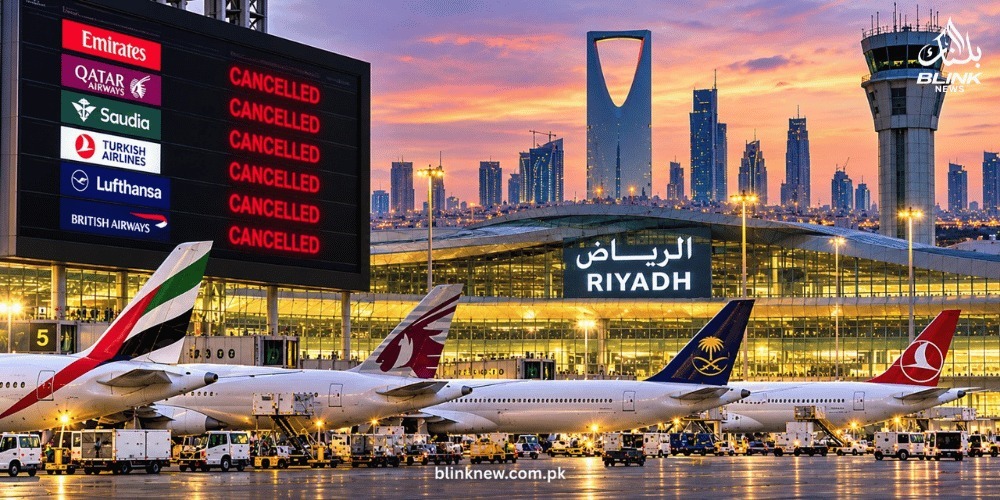
Major global airlines have reportedly suspended some flights to Riyadh, raising questions about international travel schedules, passenger bookings and airport operations in Saudi Arabia. The reported development could affect travelers planning business trips, family visits, religious journeys and onward connections through the Saudi capital.
However, the specific airlines involved, the number of affected flights and the reasons for the reported suspensions require confirmation through official announcements. Passengers should therefore check their flight status directly with their airline before traveling to the airport.
BlinkNews is monitoring developments related to international aviation and Saudi Arabia flight updates to help readers understand the potential impact on travel plans.
Flight Suspensions Raise Questions for International Travelers
Riyadh is an important destination for international passengers traveling to Saudi Arabia for business, employment, tourism and family visits. Its main airport, King Khalid International Airport, connects the capital with destinations across the Middle East, Asia, Europe and other regions.
Any disruption involving international flights to Riyadh can create difficulties for passengers, particularly those traveling on connecting tickets or working with strict arrival schedules.
Travelers may need to change departure times, arrange alternative connections or postpone their journeys if an airline cancels a scheduled service.
At present, passengers should distinguish between a complete route suspension and the cancellation of individual flights. These situations have different implications for travelers and do not necessarily indicate that all international services to Riyadh have stopped.
Why Airlines May Suspend Flights to Riyadh
Airlines can suspend or adjust services for several reasons. The actual explanation for the reported Riyadh flight suspensions should be confirmed through statements from the airlines or relevant aviation authorities.
Regional Security Concerns
Security developments can affect airline decisions, particularly when flight routes pass through areas considered sensitive or potentially unsafe. Carriers may review their routes, change flight paths or temporarily suspend selected services when operational risks increase.
Such decisions depend on current assessments and applicable aviation guidance. Without an official statement, it would be premature to attribute the reported suspensions to a particular security incident.
Operational and Airspace Restrictions
Airspace restrictions can also lead to schedule changes. When certain routes become unavailable or require longer journeys, airlines may need to reconsider departure times, aircraft availability and connecting schedules.
These adjustments can affect multiple destinations, even when an airport remains open and other airlines continue operating normally.
Airline Scheduling Decisions
Carriers sometimes revise schedules because of aircraft maintenance, staffing limitations, seasonal demand or wider operational requirements.
A change in an airline’s timetable does not automatically mean that an entire route has been permanently discontinued. Passengers should check whether their service has been delayed, cancelled, rerouted or suspended for a specific period.
How Passengers Could Be Affected
The impact of flight suspensions depends on the airlines involved, the duration of the disruption and the number of services affected.
Passengers with confirmed bookings may face several challenges:
- Missed connections: A cancellation on one leg of a journey could affect connecting flights.
- Additional accommodation costs: Travelers may need overnight accommodation if their journey is delayed.
- Changed arrival times: Business meetings, appointments and family commitments may require rescheduling.
- Ticket changes: Passengers may need to request a refund, rebooking or alternative travel arrangements under the airline’s applicable policy.
Travelers should keep their booking confirmation, ticket number and any cancellation notifications. These documents can help when contacting customer support or submitting a refund request.
What Travelers Should Do Before Departure
Passengers planning to travel to Riyadh should take practical steps to avoid unnecessary disruption.
First, check the latest flight status through the airline’s official website or mobile application. An airport departure board can provide additional information, but airline notifications are particularly useful for passengers with existing reservations.
Second, confirm the departure terminal, check-in requirements and any changes to the scheduled departure time. Travelers with connecting flights should contact their airline to understand whether the entire itinerary remains valid.
Third, avoid purchasing a replacement ticket before reviewing the options offered for the original booking. Depending on the circumstances and ticket conditions, the airline may provide an alternative flight, a refund or another remedy.
Passengers traveling internationally should also review their travel insurance policy. Coverage for cancellations and disruptions varies, and some policies exclude particular events or require specific documentation.
Riyadh Airport Operations and Alternative Travel Options
King Khalid International Airport is a major gateway to Saudi Arabia. If particular airlines suspend services, passengers may wonder whether other carriers are continuing to operate.
The answer depends on the specific route, airline and date. A suspension by one carrier does not necessarily mean that all flights serving Riyadh are affected.
Passengers should not assume that another airline has available seats without checking current schedules. Alternative services may have different departure times, prices, baggage rules and transit requirements.
Travelers considering a different connecting airport should also check visa and transit requirements before making changes. International transit rules vary according to nationality, destination and itinerary.
Official Updates Remain Essential
Reliable information is especially important during a developing aviation situation. Airline announcements, airport notices and relevant aviation authority updates are the most appropriate sources for confirming cancellations and restrictions.
Passengers should be cautious about unverified social media posts claiming that every international airline has stopped flying to Riyadh. The scope of any disruption must be established through reliable information.
BlinkNews will continue following relevant developments as verified details become available, including the airlines involved, affected routes and guidance for passengers.
Conclusion
The reported suspension of flights to Riyadh has raised concerns about international travel and potential disruption for passengers heading to Saudi Arabia. The actual impact will depend on which airlines and routes are affected and how long the changes remain in place.
Until official details are confirmed, travelers should check their bookings directly with their airlines, review alternative arrangements and avoid relying on unverified reports. Timely information from carriers and airport authorities will be essential for passengers making travel decisions.