
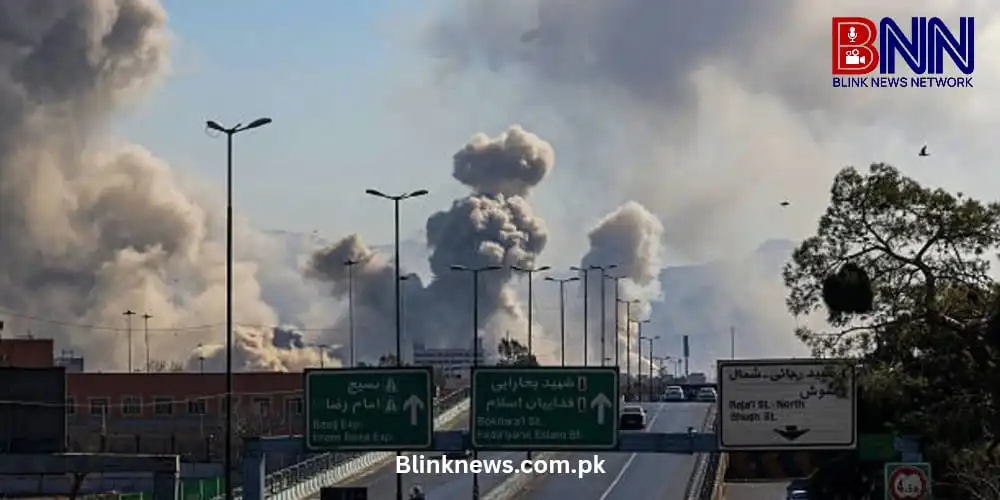
Iran has initiated the 30th wave of attacks under its ongoing military campaign, “Operation Promise 4,” targeting what Tehran describes as U.S. and Israeli military positions in the region. State-affiliated Iranian sources confirmed that the Islamic Revolutionary Guard Corps (IRGC) is employing missiles and drones in the latest offensive, signaling an intensification of regional hostilities.
The campaign, first announced several months ago, has involved repeated missile and drone strikes across strategic locations in the Middle East. Iranian officials describe the operation as a measured response to perceived threats from foreign military forces, framing the assaults as defensive countermeasures against enemy presence in the region. According to Iranian media, the strikes have focused on various military installations, including command centers and strategic facilities.
Official statements from Iran emphasize that these operations are part of a broader strategy amid ongoing military tensions. Tehran has warned that further waves of attacks may follow, suggesting a prolonged period of heightened confrontation. In recent weeks, reports have also emerged of targeted strikes on Iranian military and strategic sites by U.S. and Israeli forces, contributing to a rapidly escalating cycle of regional tensions.
Experts monitoring the situation note that the repeated attacks could have significant implications for regional security. The Middle East’s strategic landscape is already volatile, and sustained military engagements increase the risk of miscalculation or broader confrontation. Analysts caution that civilian populations in proximity to targeted sites could face heightened risks, while global energy markets and diplomatic efforts may also be affected as instability persists.
While Tehran continues to justify its operations as necessary for national defense, the international community remains concerned about the potential for escalation. The United Nations and several regional actors have called for restraint, highlighting the urgent need to prevent the conflict from spilling over into neighboring countries. As the situation evolves, the focus will be on whether diplomatic channels can mitigate the risk of further attacks and how the U.S. and Israel will respond to the latest Iranian strikes.
The 30th wave of Operation Promise 4 underscores a deepening cycle of military confrontation, with no immediate end in sight. Observers will be closely watching developments in the coming days, particularly any new responses from the United States, Israel, or allied regional forces, which could determine whether the escalation remains contained or intensifies further.
Read more posts on Blink News Network