
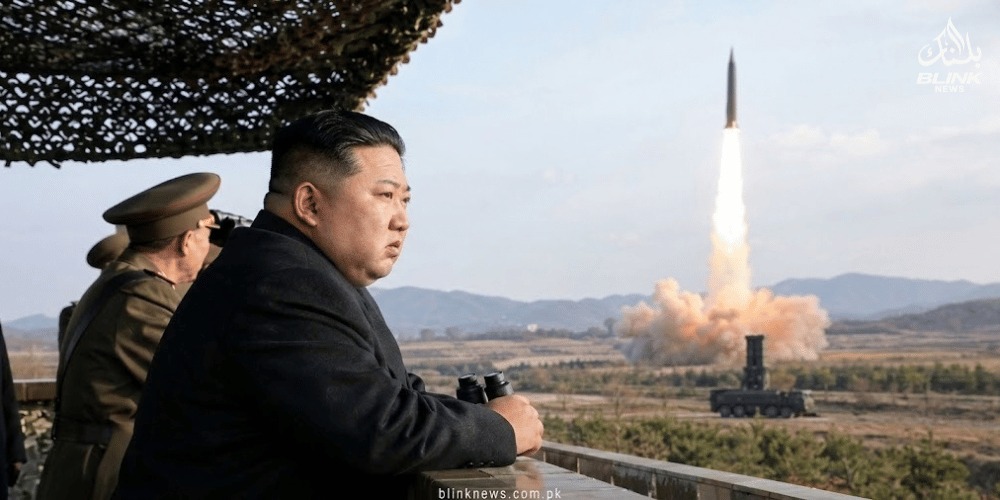
North Korea has reportedly conducted a test involving a hypersonic missile, drawing attention from the United States and South Korea amid continuing concerns over Pyongyang’s weapons development program. The reported test has renewed focus on North Korea’s efforts to develop advanced missile technologies and the security situation on the Korean Peninsula.
The development comes as North Korea continues to pursue military capabilities designed to strengthen its strategic weapons program. The United States and South Korea closely monitor such activities because advances in missile technology could create additional challenges for regional missile defense and security planning.
BlinkNews is following the reported development as attention remains focused on North Korea’s latest weapons activity and the response from Washington and Seoul.
North Korea Hypersonic Missile Test Under Report
The reported North Korea hypersonic missile test is significant because hypersonic weapons are designed to travel at extremely high speeds and can present complex challenges for existing missile-defense systems.
Hypersonic systems generally include weapons capable of travelling at speeds above Mach 5, although speed is only one aspect of their military significance. Their potential maneuverability and flight characteristics can make detection and interception more difficult than with some conventional missile systems.
North Korea has previously claimed progress in hypersonic weapons development. However, assessments of such claims can differ, making independent analysis and official military assessments important when evaluating the actual capabilities demonstrated during a test.
Why Hypersonic Weapons Matter
Hypersonic missile technology has become an important area of military research among several major powers. Countries developing these systems are seeking weapons that can potentially travel rapidly while following flight paths that complicate traditional missile-defense calculations.
For North Korea, progress in this area could form part of its broader effort to expand its missile capabilities. The country has continued developing different types of missiles, including systems intended to strengthen its strategic deterrence.
The reported test therefore has implications beyond the individual launch, particularly if it demonstrates improvements in guidance, propulsion, maneuverability or range.
US and South Korea Monitoring the Situation
The United States and South Korea remain closely involved in monitoring North Korean missile activity. Their militaries maintain systems and intelligence capabilities designed to detect and assess missile launches from North Korea.
Any significant advancement in North Korean missile technology can become an issue for defense planners in Seoul and Washington. South Korea is particularly exposed because of its geographic proximity to North Korea, while the United States maintains military forces in the region as part of its security relationship with Seoul.
The two allies have also continued joint military cooperation and exercises over the years, which North Korea frequently criticizes as a threat to its security.
Regional Security Concerns
The latest reported missile activity comes against the broader backdrop of tensions on the Korean Peninsula. North Korea has repeatedly conducted weapons tests despite international criticism and sanctions related to its nuclear and missile programs.
South Korea and the United States generally view North Korea’s weapons development as a major security concern. Pyongyang, meanwhile, has described its military development as necessary for national defense and deterrence.
These opposing positions have contributed to persistent tensions in Northeast Asia.
What a Hypersonic Test Could Mean
The significance of the North Korea hypersonic missile test depends on what the launch demonstrated. A successful test does not necessarily mean that a weapons system is fully operational or ready for deployment.
Military analysts typically examine several factors when assessing missile tests. These can include launch performance, flight trajectory, maneuverability, speed, guidance accuracy and the ability of the weapon to reach its intended target.
Independent verification is particularly important because information released by governments about weapons tests can serve strategic and political purposes.
For the United States and South Korea, understanding the actual capabilities of North Korea’s missile systems is important for determining appropriate surveillance, deterrence and defensive measures.
North Korea’s Broader Missile Program
North Korea has developed a diverse missile program covering short-, medium- and longer-range systems. Its weapons development has included ballistic missiles as well as efforts involving newer technologies.
Hypersonic weapons represent one part of this broader military modernization effort. The reported test could therefore be viewed within the larger context of Pyongyang’s attempts to improve the speed, survivability and effectiveness of its missile forces.
The development of such systems also adds another layer to the strategic calculations of countries in the region, including Japan, South Korea and the United States.
BlinkNews Continues to Follow the Development
The reported missile test is likely to receive continued attention as officials and military experts assess what the launch reveals about North Korea’s weapons capabilities.
BlinkNews will continue covering major developments involving North Korea, South Korea, the United States and regional security as more verified information becomes available.
For now, the key issue is whether the reported test demonstrates a measurable advancement in North Korea’s hypersonic missile technology and what that could mean for missile defense and security planning in the region.
Conclusion
The reported North Korea hypersonic missile test has renewed international attention on Pyongyang’s expanding missile program. Hypersonic technology is considered strategically significant because high speed and potential maneuverability can create challenges for conventional missile-defense systems.
The United States and South Korea are monitoring North Korea’s military developments closely. Further official assessments will be important in determining the capabilities demonstrated by the reported test and its wider implications for security on the Korean Peninsula.
As more verified information emerges, the test could provide additional insight into the direction of North Korea’s weapons development program and the continuing security challenges facing Northeast Asia.
FAQs
1. What is a hypersonic missile?
A hypersonic missile is generally defined as a weapon capable of travelling at speeds above Mach 5. Some hypersonic systems can also maneuver during flight, potentially making interception more difficult.
2. Did North Korea conduct a hypersonic missile test?
North Korea has reportedly conducted a test described as involving hypersonic missile technology. The precise capabilities demonstrated should be assessed through official and independent analysis.
3. Why are the US and South Korea monitoring North Korean missile tests?
The United States and South Korea monitor North Korean missile activity because developments in its weapons program can affect regional security and missile-defense planning.
4. Why are hypersonic weapons considered significant?
Their combination of very high speed and, for some systems, maneuverability can create additional challenges for existing detection and interception systems.
5. What could the reported test mean for the Korean Peninsula?
The test could increase attention on North Korea’s weapons development and regional missile defenses. Its precise significance will depend on assessments of the technology demonstrated.