
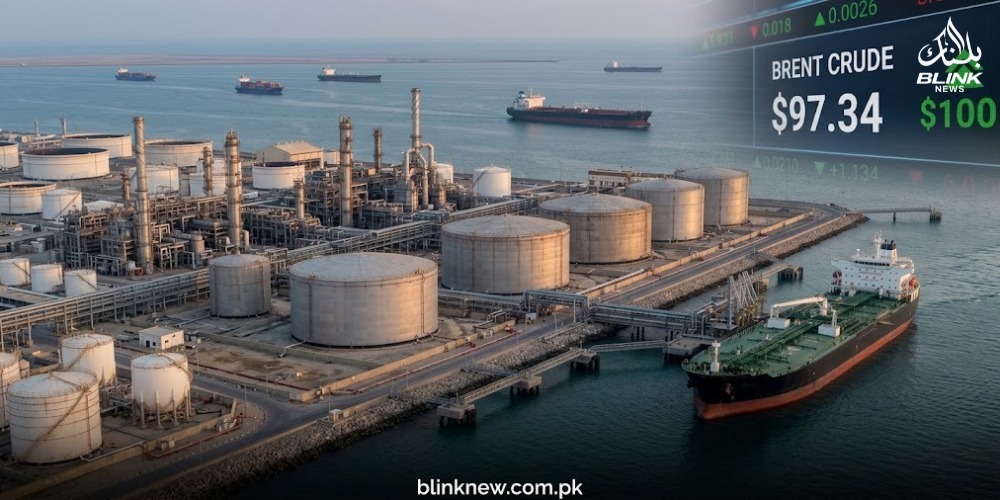
Brent crude is moving closer to the $100-per-barrel mark as escalating tensions between the United States and Iran fuel concerns about a potential disruption to global oil supplies.
Brent futures climbed to $97.34 a barrel, extending a sharp rally driven by rising geopolitical risks in the Middle East. U.S. West Texas Intermediate crude also advanced as traders assessed the possibility of prolonged supply disruptions.
The latest gains come amid a growing confrontation between Washington and Tehran, raising concerns over oil infrastructure, tanker traffic and shipping routes across the Gulf. Markets are particularly focused on the Strait of Hormuz, a critical energy corridor through which a significant share of the world’s oil supply passes.
Any sustained disruption to traffic through the waterway could send crude prices sharply higher, with analysts warning that Brent could quickly break above $100 if supplies are seriously affected.
Oil markets have already added a substantial geopolitical risk premium as investors prepare for further escalation. Higher crude prices could also increase transportation and energy costs worldwide, putting renewed pressure on inflation and potentially complicating decisions by central banks.
Despite the rally, some analysts argue that alternative export routes, production outside the Middle East and concerns about global demand could limit the upside. Traders are therefore watching military developments and official statements from Washington and Tehran closely.
The approach toward $100 represents a major psychological threshold for financial markets. A sustained move above that level could have significant consequences for consumers, businesses and economies heavily dependent on imported energy.
For now, oil traders remain on edge. With tensions showing few signs of easing, the possibility of Brent crude reaching or surpassing $100 per barrel is becoming increasingly difficult for markets to ignore.