
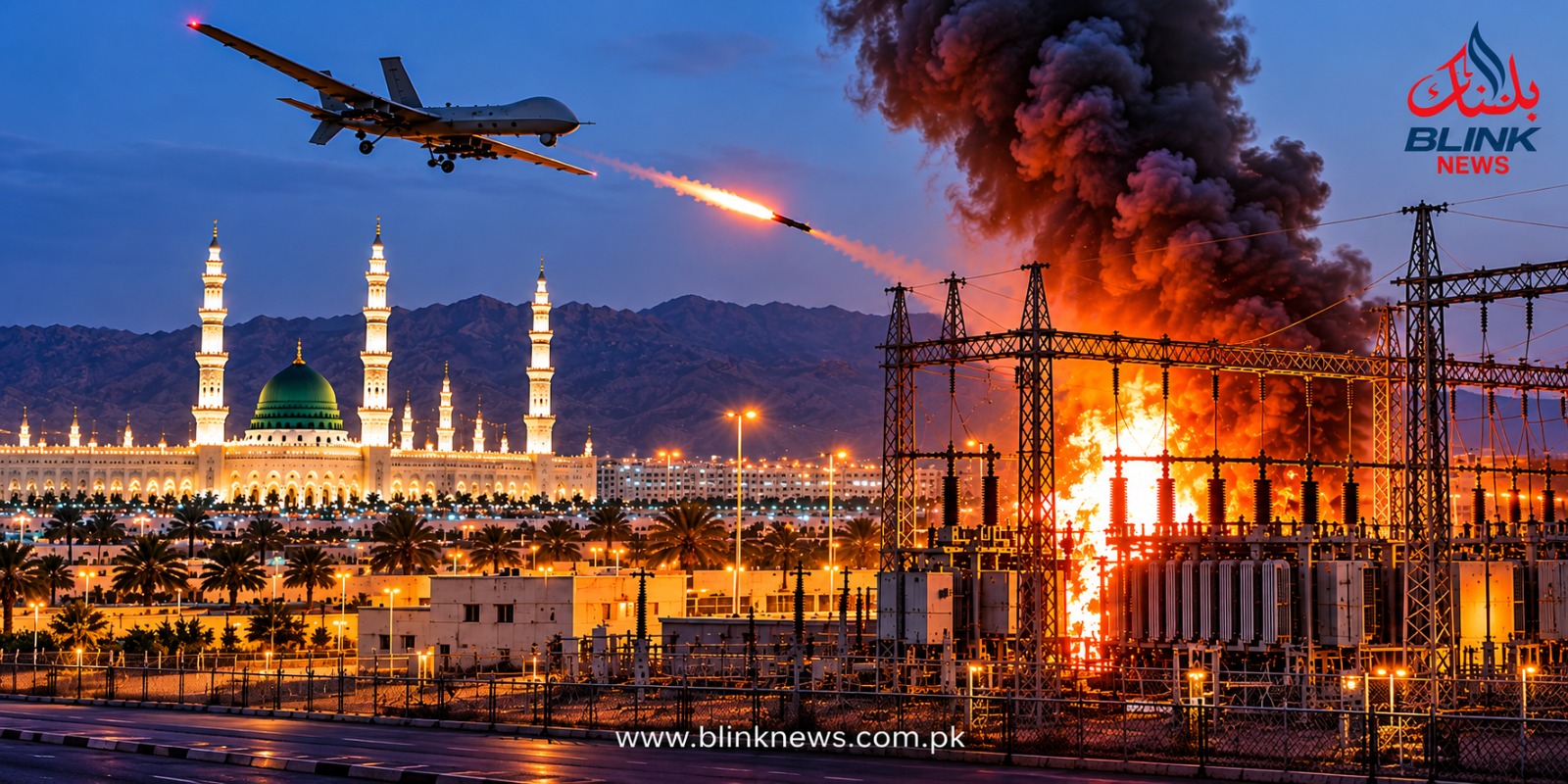
A new security development involving Saudi Arabia and Yemen has drawn attention after the Saudi-led coalition said the Houthis targeted a grid station in the Madinah region with a drone. The reported incident highlights continued concerns about drone warfare and attacks on critical infrastructure in the region.
According to the coalition’s reported statement, the attack involved an unmanned aerial vehicle directed toward a facility connected to Saudi Arabia’s electricity network. The incident comes amid wider regional tensions and ongoing security concerns linked to the conflict in Yemen.
For BlinkNews readers, the development is significant because attacks involving drones have increasingly become a feature of conflicts across the Middle East, particularly where military and civilian infrastructure overlap.
Saudi Coalition Reports Drone Attack
The Saudi-led coalition said the Houthis attack Madinah grid station involved a drone targeting an electricity-related facility. The coalition’s statement described the incident as part of the continuing threat posed by Houthi drone and missile capabilities.
The exact extent of damage, if any, to the grid station was not immediately clear from the reported information. Authorities typically assess infrastructure after such incidents to determine whether equipment, electricity distribution, or surrounding facilities have been affected.
The Saudi coalition has previously reported intercepting or responding to drones and missiles launched from Yemen. Such claims are generally followed by assessments of the launch location, intended target and consequences of the attack.
Why Grid Stations Are Sensitive Targets
Electricity grid stations are considered critical infrastructure because they help distribute power to homes, businesses, hospitals, transportation systems and other essential services.
Any attack on a major electricity facility can potentially create wider disruption even when physical damage is limited. For this reason, Saudi authorities have placed significant emphasis on protecting energy and utility infrastructure from aerial threats.
The reported Madinah incident therefore carries significance beyond the immediate security event. It also raises questions about the protection of vital civilian infrastructure from increasingly sophisticated drone technology.
Houthis and the Use of Drones
The Houthis, an armed movement based in Yemen, have developed and used drones and missiles during years of conflict involving Yemen and regional powers.
Drone technology has become an important component of modern warfare because unmanned aircraft can be relatively difficult to detect and can be used to target locations from considerable distances.
Saudi Arabia has repeatedly faced reported drone and missile threats during the Yemen conflict. Saudi authorities and the coalition have frequently emphasized their air-defence capabilities when responding to such incidents.
The latest reported Houthis attack Madinah grid station adds another incident to the broader history of aerial attacks and attempted attacks involving Saudi territory.
Impact on Saudi Arabia’s Critical Infrastructure
Saudi Arabia has invested heavily in protecting its electricity, oil, transport and other strategic infrastructure. The country’s economic importance means that disruption to major facilities can have consequences extending beyond individual locations.
Madinah is also particularly important because of its religious and cultural significance. The city attracts large numbers of visitors and pilgrims throughout the year, making security and continuity of essential services especially important.
Any threat near major population centers can therefore receive heightened attention from Saudi security authorities.
At this stage, publicly reported details about the level of damage and any interruption to electricity services remain limited. Further official information would be needed to establish the full impact.
Regional Security Concerns Continue
The reported drone incident comes against a broader backdrop of heightened tensions across the Middle East. Armed groups in the region have increasingly used drones as part of military operations, while governments have expanded air-defence systems to counter these threats.
For Saudi Arabia, the security challenge involves protecting both military targets and civilian infrastructure. Earlier attacks involving drones and missiles have demonstrated the potential for relatively low-cost aerial systems to threaten expensive and strategically important facilities.
The Houthis attack Madinah grid station report also underscores the continuing connection between developments in Yemen and wider regional security.
Saudi officials and the coalition are expected to continue monitoring aerial threats and strengthening measures designed to protect critical facilities.
What Happens Next?
The next stage will likely involve further official assessments of the reported incident, including the type of drone used, its trajectory, the intended target and whether it caused physical damage.
Independent verification is important in conflict-related reporting because initial statements from military parties may provide only partial information. Additional details from Saudi authorities, international news organizations or other independent sources could clarify what happened.
BlinkNews will continue to follow developments surrounding Saudi Arabia, Yemen and broader Middle East security issues as more verified information becomes available.
Conclusion
The reported Houthis attack Madinah grid station has renewed attention on the vulnerability of critical infrastructure to drone warfare. Saudi Arabia’s electricity network represents essential infrastructure, while Madinah’s religious importance makes security in and around the city particularly significant.
The incident also demonstrates how the conflict involving the Houthis continues to have security implications beyond Yemen. As drone technology becomes increasingly common in regional conflicts, governments across the Middle East face growing challenges in detecting and preventing attacks on strategic and civilian facilities.