
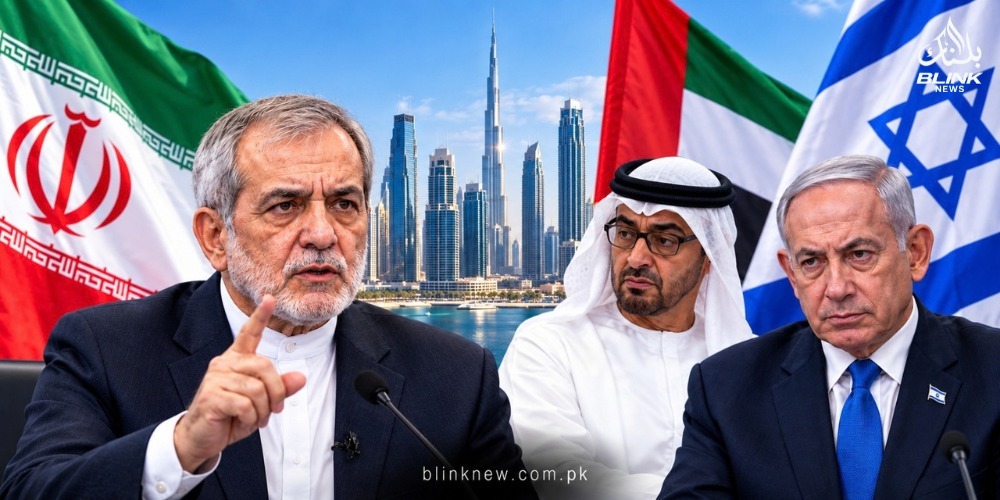
Iran has warned the United Arab Emirates over its decision to host Israeli Prime Minister Benjamin Netanyahu, according to reports surrounding the latest tensions in the Middle East. The reported warning comes at a sensitive time for relations between Iran, Israel and several Gulf countries, with diplomatic moves involving Israel attracting close attention across the region.
The development has placed the Iran warns UAE over Netanyahu issue at the center of regional discussions. Any high-level engagement between Israel and a Gulf state can carry wider diplomatic implications, particularly as Tehran continues to closely monitor Israel’s regional activities.
For readers following the latest developments, BlinkNews is tracking the situation as part of its coverage of Middle East diplomacy, regional security and international affairs.
Iran’s Warning to the UAE
The reported Iranian warning focuses on the UAE’s decision to host Israeli Prime Minister Benjamin Netanyahu. Tehran has repeatedly expressed strong opposition to Israel’s policies and has closely watched the expansion of Israel’s diplomatic and economic relationships with Arab states.
The Iran warns UAE over Netanyahu development highlights the difficult diplomatic environment facing Gulf countries. The UAE has maintained diplomatic relations with Israel since the Abraham Accords, while Iran has continued to oppose Israel’s regional policies.
A warning from Tehran can therefore add another layer of tension to an already complicated relationship between Iran and the Gulf states.
The exact implications of the reported message will depend on subsequent statements from Iranian and Emirati officials. Further clarification from official government sources would be important for understanding the scope and seriousness of the warning.
Why Netanyahu’s UAE Presence Matters
UAE-Israel Relations
The UAE and Israel established formal diplomatic relations through the Abraham Accords, announced in 2020. Since then, the two countries have developed cooperation in areas including trade, tourism, technology and diplomatic engagement.
Netanyahu’s engagement with the UAE carries significance because Abu Dhabi is one of the most prominent Arab capitals to maintain open diplomatic relations with Israel.
Any visit or high-level meeting involving the Israeli prime minister can therefore attract attention from neighboring countries, particularly Iran.
Iran’s Regional Concerns
Iran has consistently opposed Israel’s regional military and political activities. Tehran also views Israel’s growing relationships with Arab states as an important strategic development.
The Iran warns UAE over Netanyahu story reflects this broader disagreement. Iran has historically emphasized the Palestinian issue and criticized Arab-Israeli normalization.
At the same time, Gulf governments have sought to maintain their own diplomatic and economic interests while navigating relations with both regional and international powers.
Growing Iran-Israel Tensions
Relations between Iran and Israel have remained highly sensitive amid continuing disputes over security, military activity and regional influence.
Any new diplomatic development involving Israel can therefore become part of a larger regional debate.
For the UAE, maintaining relations with Israel while managing ties with neighboring countries requires careful diplomacy. Abu Dhabi has also pursued dialogue with Tehran on regional issues, making the balance between these relationships particularly important.
The reported warning could increase diplomatic pressure on the UAE, although its eventual impact will depend on how officials in Abu Dhabi and Tehran respond.
Possible Impact on Gulf Diplomacy
The latest development could have implications for wider Gulf diplomacy. Gulf states have increasingly attempted to balance security concerns with economic partnerships and diplomatic engagement.
The UAE has positioned itself as an important commercial and diplomatic center in the Middle East. Its relations with Israel, Iran, Saudi Arabia and other regional powers are therefore closely watched.
A significant escalation between Iran and Israel could make this diplomatic balancing act more difficult.
For businesses, investors and international observers, regional stability remains an important consideration. Any deterioration in relations between major Middle Eastern powers can also affect energy markets, transportation routes and broader economic confidence.
What the Warning Could Mean for the Region
The Iran warns UAE over Netanyahu development demonstrates how closely connected diplomatic decisions have become across the Middle East.
The UAE’s relationship with Israel is one part of a wider regional transformation that began with the Abraham Accords. Iran, meanwhile, continues to oppose Israel and remains concerned about its growing partnerships in the Gulf.
The response from the UAE will be important in determining whether the issue remains a diplomatic disagreement or develops into a broader regional dispute.
International governments are also likely to watch developments closely because the Middle East remains strategically important for global energy supplies, trade routes and international security.
BlinkNews will continue to follow official statements and verified developments involving Iran, the UAE and Israel.
Conclusion
The reported warning from Iran to the UAE over hosting Benjamin Netanyahu highlights the complex diplomatic environment in the Middle East. The situation brings together several sensitive issues, including Iran-Israel tensions, UAE-Israel relations and the broader security concerns of Gulf countries.
While the immediate consequences remain unclear, the Iran warns UAE over Netanyahu development shows how diplomatic engagements involving Israel can have wider regional implications.
Further official statements from Tehran, Abu Dhabi and Jerusalem will be important for determining how the situation develops and whether the latest disagreement leads to additional diplomatic tensions.