
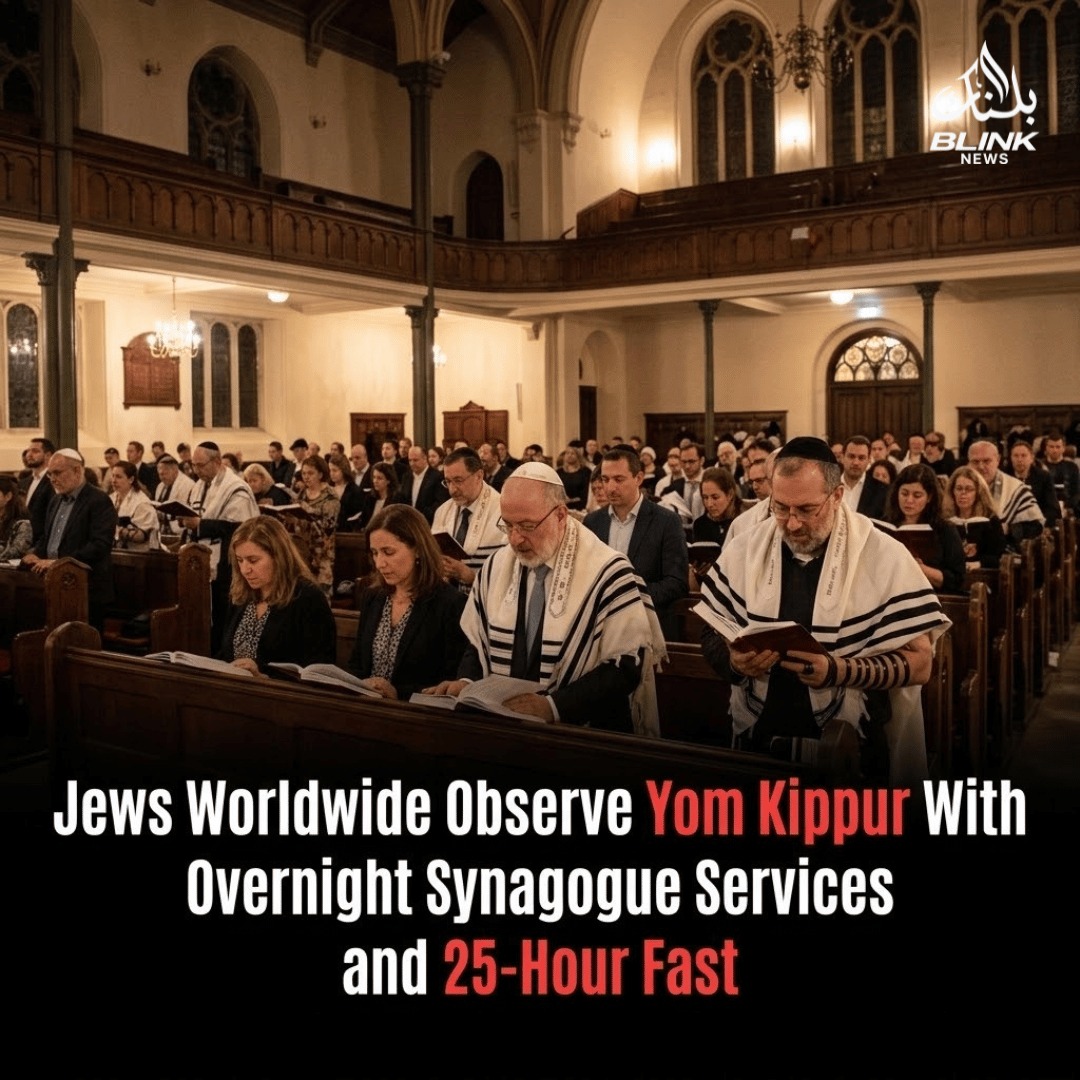
Jews around the world are observing Yom Kippur 2026, the holiest day in the Jewish calendar, with fasting, prayer, repentance and reflection. The Day of Atonement began at sundown on Sunday, September 20, and concludes at nightfall on Monday, September 21. The religious observance traditionally includes a 25-hour fast and a series of synagogue services focused on forgiveness and spiritual renewal.
Across Jewish communities, worshippers gather for special prayers beginning with the evening service and continuing through the following day. In Israel and Jewish communities around the world, Yom Kippur brings a noticeable change to daily life as many people set aside ordinary activities for prayer and religious observance.
What Is Yom Kippur?
Jews Worldwide Observe Yom Kippur With 25-Hour also known as the Day of Atonement, comes 10 days after Rosh Hashanah, the Jewish New Year. It marks the culmination of the High Holy Days and is traditionally a time for repentance, seeking forgiveness and personal reflection.
The holiday is considered the most solemn day of the Jewish year. Rather than being celebrated in the conventional sense, Yom Kippur is observed through fasting, prayer and religious services.
Jewish tradition places particular emphasis on acknowledging wrongdoing, asking forgiveness and considering how to improve relationships and conduct in the coming year.
Yom Kippur 2026 Begins With Evening Services
The observance begins before the 25-hour fast with evening services. One of the best-known prayers associated with the opening of Yom Kippur is Kol Nidrei, which is traditionally recited during the evening service.
Synagogues hold special services throughout the holiday. These can include evening prayers, morning services, memorial prayers and an afternoon service, culminating in Ne’ilah, the closing service held toward the end of Yom Kippur.
The exact schedule varies between congregations and locations, but the central focus remains prayer, repentance and spiritual reflection.
Why Do Jews Fast for 25 Hours?
A central part of Yom Kippur is the traditional 25-hour fast. The fast begins before sunset and continues until nightfall the following day. During the fast, traditional observance involves abstaining from both food and water.
The extended fast is intended to help worshippers turn their attention away from ordinary physical needs and toward prayer and reflection.
However, Jewish religious practice also recognizes health considerations. Traditional guidance provides exemptions for people for whom fasting could pose a danger to their health, as well as certain groups such as children and pregnant or nursing women.
Prayer, Repentance and Remembrance
Yom Kippur services include several significant prayers and religious readings. According to the Chabad Jewish calendar, the day includes five prayer services: Maariv and Kol Nidrei on the eve of Yom Kippur, followed by Shacharit, Musaf, Minchah and Ne’ilah.
Memorial prayers are also an important part of the day for many Jewish communities. Yizkor, a memorial service remembering deceased relatives and loved ones, is traditionally recited during Yom Kippur.
The closing Ne’ilah service marks the final stage of the day’s prayers before the fast ends.
Yom Kippur Observed Around the World
Although Jewish communities follow the same broad religious traditions, the experience of Yom Kippur differs by location. Synagogues in cities across North America, Europe, Israel and other regions organize services according to local sunset and nightfall times.
In Israel, Yom Kippur is particularly visible in public life. Transportation and other routine activities are significantly reduced during the holiday, while communities observe the day through prayer and fasting. Current reports also show heightened security arrangements in Israel during this year’s observance.
The holiday’s timing is determined by the Jewish calendar. In 2026, Yom Kippur falls on September 20–21, corresponding to the 10th day of the Hebrew month of Tishrei.
The Meaning of the Day of Atonement
For many Jews, Yom Kippur is a period of deep personal reflection. The focus on repentance and forgiveness encourages individuals to consider their actions during the previous year and seek reconciliation where appropriate.
The day also represents the conclusion of a period of reflection that begins with Rosh Hashanah. Together, these observances form a central part of the Jewish High Holy Days.
As Jewish communities complete the 25-hour fast, families and congregations traditionally gather for a meal after the final prayers. The end of Yom Kippur therefore marks both the conclusion of a solemn day and the beginning of a new period of spiritual renewal.
Conclusion
Yom Kippur 2026 is being observed by Jewish communities worldwide through a 25-hour fast, synagogue services, prayer, repentance and remembrance. Beginning at sundown on September 20 and ending on September 21, the Day of Atonement remains a significant period of religious reflection and forgiveness in the Jewish calendar.
Frequently Asked Questions
1. What is Yom Kippur?
Yom Kippur is the Jewish Day of Atonement and is regarded as the holiest day in the Jewish calendar. It is traditionally observed through fasting, prayer, repentance and seeking forgiveness.
2. When is Yom Kippur 2026?
Yom Kippur 2026 begins at sundown on Sunday, September 20, and ends at nightfall on Monday, September 21.
3. How long is the Yom Kippur fast?
The traditional Yom Kippur fast lasts approximately 25 hours, beginning before sunset and ending after nightfall the following day.
4. What happens during Yom Kippur synagogue services?
Synagogue services include prayers, religious readings, repentance and memorial observances. Major services include Kol Nidrei, Shacharit, Musaf, Minchah and the closing Ne’ilah service.
5. Why is Yom Kippur important to Jewish people?
Yom Kippur provides a period for repentance, forgiveness, prayer and personal reflection. It marks the culmination of the Jewish High Holy Days that begin with Rosh Hashanah.