
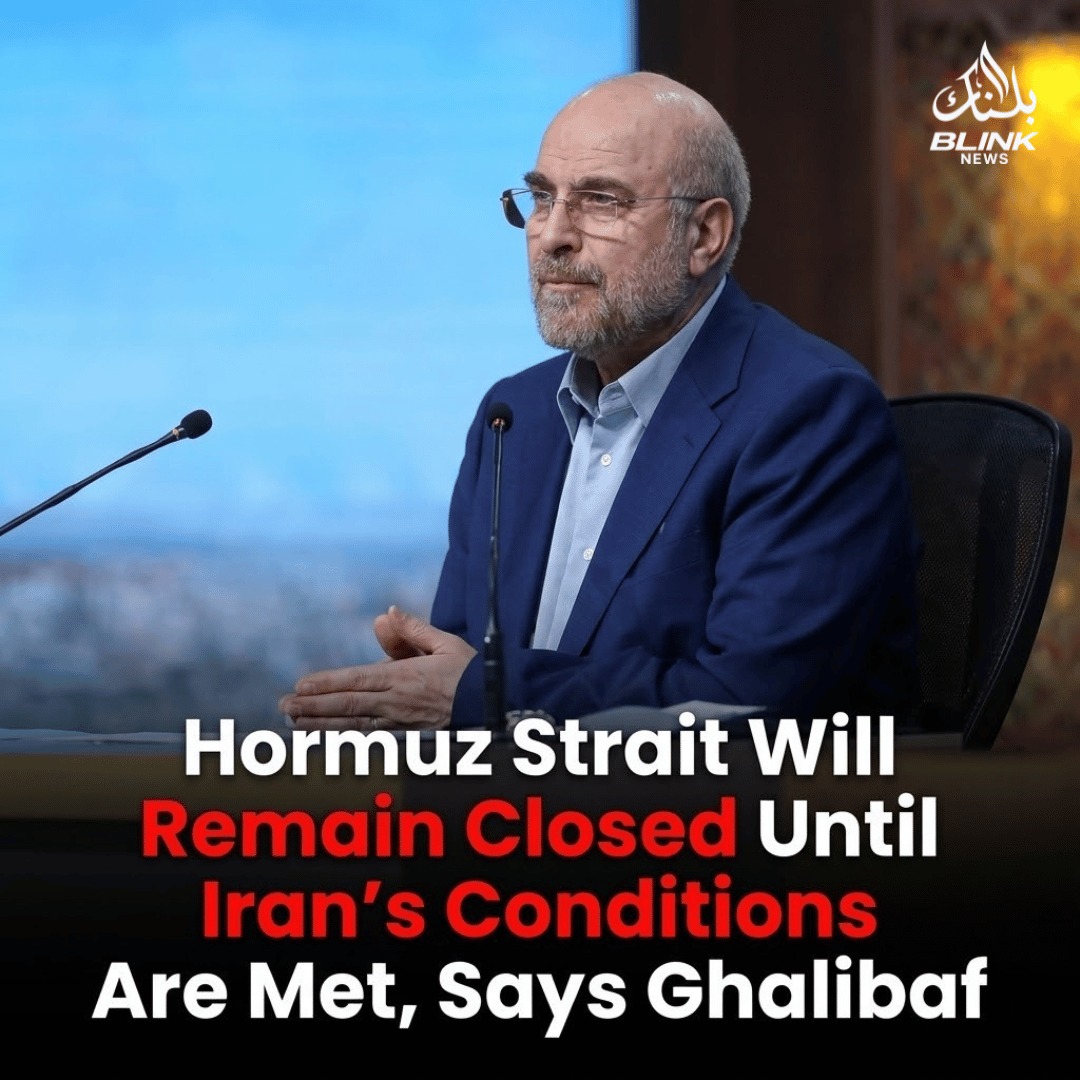
Iranian Parliament Speaker and chief negotiator Mohammad Bagher Ghalibaf has said theStrait of Hormuz to Stay Closed Until Iran conditions are met and the United States fulfills its commitments. His latest remarks come as tensions between Iran and the United States remain high and international concerns grow over the impact on global energy shipments.
Ghalibaf said Iran has communicated its conditions to the other side through intermediaries and ruled out returning to previous negotiations or reopening the strategic waterway until Tehran’s demands are addressed.
The Strait of Hormuz is one of the world’s most important energy corridors, making the latest Iranian position significant for oil markets, shipping companies and countries dependent on Gulf energy supplies.
Ghalibaf Says Hormuz Will Stay Closed
Speaking in Iran’s parliament on Sunday, Ghalibaf said Tehran’s position was clear and that the reopening of the Strait of Hormuz depended on the fulfillment of Iran’s conditions.
According to reports from Iranian state media and international news agencies, Ghalibaf said Iran’s legitimate rights must be recognized and that US commitments must be implemented before there can be a return to earlier negotiating arrangements or the reopening of the waterway.
Ghalibaf also indicated that Iran intends to combine military pressure with diplomacy. He said Tehran would continue defending itself while using diplomatic channels when conditions are considered appropriate.
Iran Has Communicated Conditions Through Mediators
Iran has reportedly used intermediaries to communicate its requirements to Washington. The latest statements indicate that Tehran views fulfillment of those conditions as directly linked to any future reopening of the Strait of Hormuz.
Earlier statements from Ghalibaf had included demands connected to the lifting of sanctions, the removal of a maritime blockade and the release of frozen Iranian assets. Those demands were associated with an interim agreement that later broke down.
The exact details and status of all Iranian demands remain part of ongoing diplomatic discussions.
Why the Strait of Hormuz Matters
The Strait of Hormuz connects the Persian Gulf with the Gulf of Oman and the Arabian Sea. It is a critical route for international energy transportation, particularly oil and liquefied natural gas shipments.
Any prolonged disruption in the waterway can create uncertainty for energy markets and increase shipping costs. Countries across Asia and other regions rely heavily on energy supplies moving through the Gulf.
Recent reporting shows that maritime traffic has fallen sharply. Reuters reported on September 21 that only 17 commodity vessels had transited the strait over the weekend, compared with 37 the previous week and a pre-war average of about 125 vessels per day. Some oil shipments, however, have continued through the waterway.
This means that while Iran describes the Strait as closed, limited vessel movements are still being reported.
Impact on Oil and Global Shipping
The uncertainty surrounding the Strait of Hormuz has increased pressure on the global energy and shipping sectors.
Oil tankers face greater security concerns and operational challenges when navigating the region. Shipping companies may also have to consider alternative routes, delays, insurance costs and additional fuel expenses.
The situation is particularly important for major energy exporters and importers in the Gulf and Asia. Any further reduction in tanker traffic could place additional pressure on global oil supplies and transportation networks.
Reuters has also reported that Saudi Arabia has continued moving significant quantities of oil through the Strait, highlighting the complicated nature of maritime traffic during the ongoing conflict.
Iran-US Negotiations Remain Uncertain
Ghalibaf’s latest comments suggest that Tehran does not currently see reopening the Strait of Hormuz as separate from the wider dispute with Washington.
Iran has maintained that negotiations must address its stated conditions and that US commitments need to be implemented. At the same time, the United States and Iran remain involved in a broader confrontation that has affected shipping and energy markets across the region.
The diplomatic situation could therefore play an important role in determining the future of the Strait of Hormuz. Any agreement that addresses Iran’s conditions could potentially change the situation, while further escalation could create additional disruption.
What Happens Next?
For international markets, the key issue is whether diplomatic efforts can produce an arrangement that allows shipping through the Strait of Hormuz to return toward normal levels.
For now, Ghalibaf’s position is that the waterway will not be reopened until Iran’s conditions are fulfilled. However, reports of continued but sharply reduced vessel movements show that the situation on the ground remains more complicated than a complete halt in maritime traffic.
The coming days will be closely watched by energy markets, shipping companies and governments across the Gulf and Asia as diplomatic efforts continue.
Conclusion
Iranian Parliament Speaker Mohammad Bagher Ghalibaf has reaffirmed that the Strait of Hormuz will remain closed until Iran’s conditions are met and US commitments are fulfilled. The statement adds another layer of uncertainty to an already tense regional situation.
Although Iran has declared that the waterway will remain closed, some commercial vessels are still reportedly moving through the strait at greatly reduced levels. The future of this vital shipping route will depend heavily on developments in the Iran-US confrontation and ongoing diplomatic efforts.
Frequently Asked Questions
1. Why is Iran keeping the Strait of Hormuz closed?
Iran says the Strait of Hormuz will remain closed until its stated conditions are met, its rights are recognized and US commitments are fulfilled.
2. Who is Mohammad Bagher Ghalibaf?
Mohammad Bagher Ghalibaf is the speaker of Iran’s parliament and has also been involved as a senior Iranian negotiator in discussions with the United States.
3. Why is the Strait of Hormuz important?
The Strait of Hormuz is a major international energy shipping route connecting the Persian Gulf with the Gulf of Oman and the Arabian Sea.
4. Are ships still passing through the Strait of Hormuz?
Yes. Recent Reuters reporting indicates that some commercial and energy vessels continue to pass through the waterway, although traffic has fallen dramatically compared with normal levels.
5. Could the Strait of Hormuz reopen?
According to Ghalibaf, reopening depends on Iran’s conditions being met and US commitments being implemented. The outcome will depend on future diplomatic and security developments.