
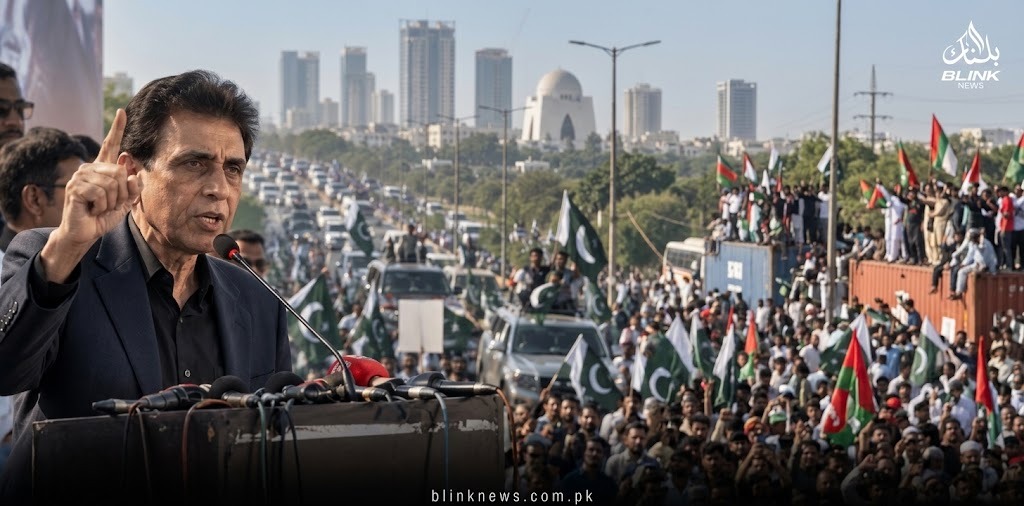
MQM-Pakistan leader Khalid Maqbool Siddiqui has described Karachi as a central force in Pakistan’s political and economic future, saying that the “Karachi caravan” will become the destiny of Pakistan. His remarks highlight the importance of Karachi in national affairs and reflect the political narrative surrounding the country’s largest metropolitan city.
Karachi has long played a significant role in Pakistan’s economy, business, trade, industry and politics. Political leaders frequently emphasize the city’s contribution to the national economy while calling for greater attention to its infrastructure, public services and development needs.
Siddiqui’s statement has therefore drawn attention to the broader discussion about Karachi’s future and its role in Pakistan’s development.
Khalid Maqbool Siddiqui’s Statement on Karachi
Khalid Maqbool Siddiqui, a senior leader of Muttahida Qaumi Movement-Pakistan (MQM-P), has emphasized Karachi’s importance in shaping Pakistan’s future.
His reference to the “Karachi caravan” presents the city as part of a wider political and social movement. The statement also reflects the long-standing position of MQM-P leaders that Karachi should receive greater recognition for its contribution to Pakistan.
The remarks come against the backdrop of continuing discussions about urban development, municipal services, economic activity and political representation in Karachi.
Why Karachi Remains Important to Pakistan
Karachi’s Economic Contribution
Karachi is widely regarded as Pakistan’s major commercial and financial centre. The city hosts important businesses, financial institutions, industrial units, ports and trading activities.
The Port of Karachi and Port Qasim support national and international trade, while the city’s industrial and commercial sectors provide employment to millions of people.
Because of this economic importance, developments in Karachi can have consequences beyond the city itself.
Karachi’s Political Significance
Karachi also holds considerable political importance. Its large population makes it an important electoral centre, while its diverse communities contribute to a complex political environment.
Political parties regularly focus on issues such as local government, public transport, water supply, sanitation, employment and infrastructure when discussing Karachi’s future.
Siddiqui’s statement places these concerns within a broader national context.
The Meaning Behind the “Karachi Caravan”
The phrase “Karachi caravan” can be understood as a political expression representing the people, aspirations and future direction of Karachi.
Rather than referring only to physical movement, the phrase points toward a broader idea of Karachi becoming a stronger force in Pakistan’s political and economic development.
For Karachi residents, issues such as better roads, reliable public transport, improved sanitation, water availability and effective municipal administration remain important parts of the city’s development debate.
Focus on Development and Representation
Karachi’s political discourse has often included calls for stronger local government institutions and greater decision-making authority at the city level.
Supporters of greater local empowerment argue that a large metropolitan city requires administrative structures capable of responding quickly to its population and infrastructure needs.
At the same time, Karachi’s development involves multiple levels of government and stakeholders, making coordination an important part of any long-term strategy.
Karachi’s Challenges and Future Opportunities
Despite its economic importance, Karachi faces significant challenges. Rapid population growth, traffic congestion, infrastructure pressures, water shortages, waste management and public transportation are among the issues frequently discussed by residents, policymakers and political parties.
Addressing these challenges could have wider economic benefits for Pakistan.
Improved transportation networks could make it easier for workers and businesses to operate. Better urban planning could support investment, while reliable utilities and municipal services could contribute to a stronger business environment.
Karachi’s ports and industrial base also provide opportunities for expanding trade, logistics and investment.
What Siddiqui’s Remarks Mean for Pakistan
Khalid Maqbool Siddiqui’s comments draw attention to the relationship between Karachi’s progress and Pakistan’s broader future.
The statement reflects a political argument that the country’s largest economic centre should have an important place in national development planning.
Whether Karachi can achieve its full potential depends on several factors, including infrastructure investment, effective governance, coordination between institutions, economic policies and the ability to address the needs of its growing population.
The discussion also demonstrates why Karachi remains an important subject in Pakistan’s political and economic conversation.
Conclusion
Khalid Maqbool Siddiqui’s statement that the “Karachi caravan will become Pakistan’s destiny” has brought renewed attention to Karachi’s role in the country’s future.
As Pakistan’s major commercial and industrial centre, Karachi has an important influence on trade, employment and economic activity. At the same time, the city continues to face major urban challenges that require sustained attention.
The future of Karachi will depend not only on political statements but also on practical development, effective administration, infrastructure investment and cooperation among relevant institutions. The continuing debate shows that Karachi’s direction remains closely connected with Pakistan’s wider economic and political outlook.
Frequently Asked Questions
1. Who is Khalid Maqbool Siddiqui?
Khalid Maqbool Siddiqui is a senior Pakistani politician and a prominent leader of Muttahida Qaumi Movement-Pakistan (MQM-P).
2. What did Khalid Maqbool Siddiqui say about Karachi?
Siddiqui said that the “Karachi caravan will become Pakistan’s destiny,” highlighting what he described as the importance of Karachi and its people to Pakistan’s future.
3. Why is Karachi important to Pakistan?
Karachi is a major commercial, financial and industrial centre. It also plays an important role in Pakistan’s trade through its ports and has a large and diverse population.
4. What are some major challenges facing Karachi?
Major challenges frequently associated with Karachi include traffic congestion, water supply, waste management, public transportation, infrastructure and urban planning.
5. How can Karachi contribute to Pakistan’s future?
Improved infrastructure, stronger urban services, effective governance, investment and expanded trade and industrial activity could help Karachi contribute further to Pakistan’s economic development.