
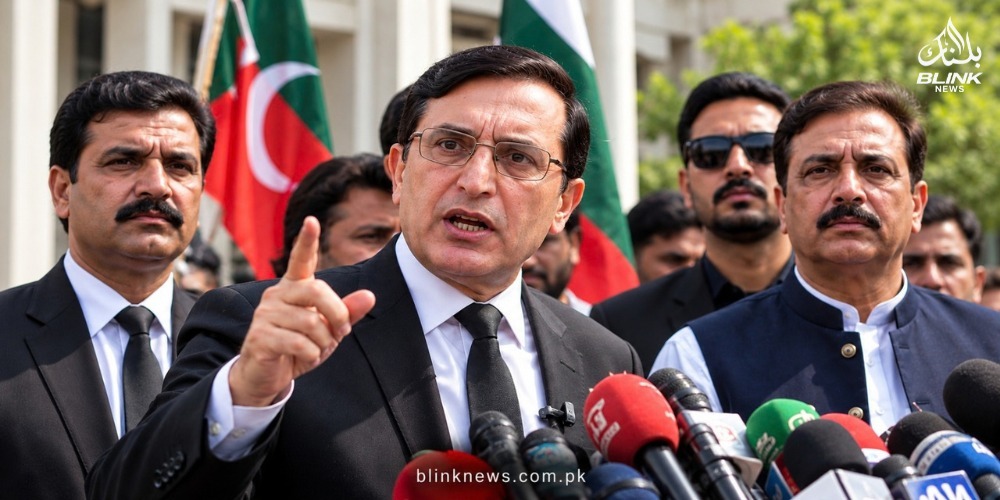
Pakistan’s political landscape remains closely watched as Barrister Gohar Khan has described a possible Long March political decision as a final political matter. His statement highlights the importance of consultation, political strategy and the role of party leadership in deciding the next course of action.
The remarks come amid continued political discussions in Pakistan, where opposition parties and their supporters have remained focused on political developments and possible future movements. The issue of a long march can carry significant political implications because such campaigns often involve large-scale public mobilization and demand careful organizational planning.
For readers following the latest developments, BlinkNews will continue to track statements from political leaders and provide updates as further details emerge.
Barrister Gohar Calls Long March a Final Political Decision
Barrister Gohar’s statement indicates that the question of a long march should be viewed as a major political decision rather than an immediate operational step. The wording suggests that the final position would depend on the relevant political leadership and its broader strategy.
A Long March political decision can affect how a political party communicates with supporters, organizes workers and approaches negotiations with the government and other political stakeholders.
Rather than being a routine political activity, a long march generally requires extensive preparation. This can include coordination among party organizations, communication with workers, arrangements for participants and decisions about the timing and route of the movement.
What a Long March Could Mean for Pakistan’s Politics
Long marches have historically been an important form of political mobilization in Pakistan. Political parties have used public demonstrations and nationwide campaigns to raise political demands and put pressure on governments.
If a long march is formally announced, it could become a significant development in the country’s political situation. However, its scale and impact would depend on several factors, including public participation, political messaging, government response and the ability of organizers to maintain coordination.
The decision could also influence political negotiations. Political parties sometimes use planned demonstrations as part of a wider strategy that includes talks, parliamentary activity and engagement with supporters.
Political Mobilization and Party Workers
A successful political movement requires coordination at different levels. Party workers and local organizations can play an important role in communicating political messages and mobilizing supporters.
For any future long march, political leadership would also need to establish clear objectives. These could include specific political demands, calls for negotiations or broader issues related to governance and national politics.
PTI and the Broader Political Situation
Barrister Gohar has been a prominent political figure associated with Pakistan Tehreek-e-Insaf (PTI). His comments are therefore being followed closely by supporters and political observers interested in the party’s future strategy.
The discussion surrounding a Long March political decision comes against the backdrop of continuing political tensions in Pakistan. Different political groups have adopted varying approaches toward government policies, negotiations and public mobilization.
At this stage, the exact timing, route, scale or organizational details of any future long march should not be assumed unless formally announced by the relevant political leadership.
Why the Decision Matters
A decision to launch a long march can have consequences beyond political rallies. Large public gatherings may affect traffic, business activity, security arrangements and administrative planning, particularly if demonstrations involve major cities such as Islamabad.
For this reason, authorities and political parties generally need to consider public safety and logistical arrangements when discussing large-scale political activities.
The political messaging surrounding such a decision can also influence public debate. Statements from party leaders may provide indications about their priorities, but further official announcements are necessary before specific plans can be confirmed.
What Happens Next?
The next stage will likely depend on further statements from Barrister Gohar and other members of the political leadership. Any formal announcement would be expected to clarify whether a long march has been approved, what its objectives are and how supporters would participate.
Political developments can change quickly, so readers should distinguish between preliminary statements, political discussions and formally announced decisions.
BlinkNews will continue monitoring developments related to Pakistan’s political situation, PTI activities and statements from key political figures.
Conclusion
Barrister Gohar’s description of the Long March political decision as a final political matter underlines the significance of any future announcement. A long march would represent a major form of political mobilization and could influence political discussions across Pakistan.
For now, the key issue is whether the political leadership formally announces further details. Until such information is released, questions regarding timing, route, participation and specific demands remain subject to future political decisions.
As the situation develops, BlinkNews will provide readers with updates based on official statements and confirmed information.