
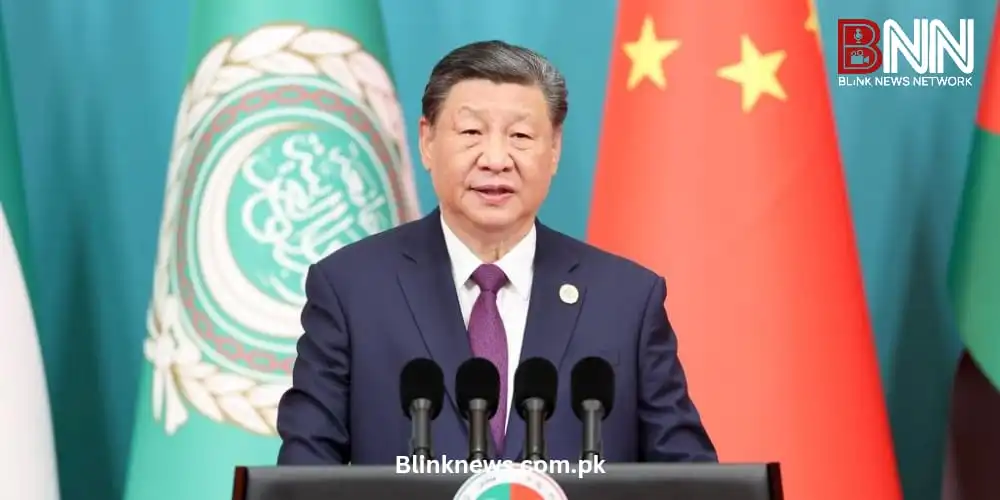
BEIJING, April 14 — Chinese President Xi Jinping has called for stronger and more dynamic cooperation between China and the Arab world, emphasizing the need for deeper partnerships as global tensions continue to reshape international relations.
Speaking during a high-level meeting in Beijing with Sheikh Khaled bin Mohamed bin Zayed Al Nahyan, Crown Prince of Abu Dhabi, President Xi said China and Arab nations must work together more closely to face growing international challenges and safeguard peace, development, and stability. According to official media reports, Xi stressed that the world is currently experiencing “unprecedented changes” and urged nations to choose cooperation over confrontation.
The Chinese leader’s remarks come at a critical time for the Middle East, as the Gulf region remains tense following failed diplomatic talks between Washington and Tehran aimed at ending the ongoing conflict involving Iran. Analysts say Xi’s statements reflect Beijing’s desire to expand its political and economic influence across the Arab world while presenting itself as a stable global partner during a period of uncertainty.
“Greater coordination and cooperation are needed as humanity faces the choices between peace and war, unity and confrontation,” Xi said during the meeting, according to a Chinese media pool report.
Expanding China-Arab Relations
China has steadily strengthened its ties with Arab nations over the past decade, becoming one of the region’s largest trading partners and investors. Beijing imports vast quantities of oil and gas from Gulf states while investing heavily in infrastructure, energy, telecommunications, and transportation projects under its Belt and Road Initiative.
Xi’s latest remarks underline China’s long-term strategy of building stronger strategic partnerships with Middle Eastern nations, particularly as Western influence in parts of the region faces increasing scrutiny.
Observers note that Beijing has positioned itself as an alternative diplomatic and economic partner for Arab governments seeking diversified international alliances. China has maintained neutral positions in many Middle Eastern conflicts while promoting dialogue and development partnerships instead of military intervention.
“China views the Arab world as an essential strategic partner,” said one Beijing-based foreign affairs analyst. “This is about energy security, trade, regional influence, and shaping a multipolar world order.”
UAE at Center of Growing Partnership
The United Arab Emirates remains one of China’s closest partners in the Arab world. Trade between the two countries has surged in recent years, with billions of dollars invested in technology, logistics, renewable energy, and real estate projects.
During Tuesday’s meeting, Xi praised relations between China and the UAE, calling them a model of mutual trust and cooperation. He also expressed readiness to deepen bilateral ties in innovation, green energy, finance, and digital technology.
The visit by Sheikh Khaled to Beijing is being closely watched by international observers as both countries seek to strengthen cooperation across multiple sectors. The UAE has emerged as a major Chinese investment hub in the Middle East and plays a central role in Beijing’s regional economic strategy.
Middle East Instability Influencing Diplomacy
Xi’s appeal for deeper cooperation also comes amid heightened instability in the Gulf region. Tensions have escalated after recent diplomatic efforts between the United States and Iran reportedly failed to produce a breakthrough in ending weeks of hostilities tied to the Iran conflict.
The worsening security situation has raised concerns about disruptions to global oil markets and regional stability. China, as the world’s largest energy importer, has a major stake in maintaining peace across the Middle East.
Beijing has increasingly taken a more active diplomatic role in the region in recent years, including brokering a historic reconciliation deal between Saudi Arabia and Iran in 2023. Since then, China has sought to portray itself as a peace-building force in the Middle East.
Analysts believe Xi’s latest statements indicate Beijing’s intention to remain engaged in regional affairs while promoting itself as a responsible global power.
Strategic Shift in Global Politics
Xi’s message also reflects broader geopolitical shifts as China seeks to challenge Western dominance in international diplomacy. By strengthening relations with Arab nations, Beijing is building alliances across the Global South and expanding support for a more multipolar international system.
Chinese officials have repeatedly emphasized the importance of respecting sovereignty, opposing foreign interference, and promoting independent development paths—messages that resonate strongly with many Arab governments.
Experts suggest China’s diplomatic outreach is part of its broader campaign to position itself as a leader among developing nations while countering U.S. influence globally.
“China is trying to show that it can be a reliable partner not just economically, but politically and strategically,” said a regional affairs expert. “Its engagement with Arab countries is central to that vision.”
Looking Ahead
President Xi’s call for deeper cooperation is expected to further strengthen diplomatic momentum ahead of future China-Arab summits and regional forums. China has already announced plans to continue expanding partnerships in artificial intelligence, renewable energy, infrastructure development, and advanced technology with Arab nations.
As the Middle East navigates growing uncertainty and global powers compete for influence, Beijing’s expanding presence is likely to play an increasingly significant role in shaping the region’s future.
For now, Xi’s remarks signal China’s clear intention: to deepen its partnership with the Arab world and strengthen its position as a key player in Middle Eastern diplomacy, trade, and security.