
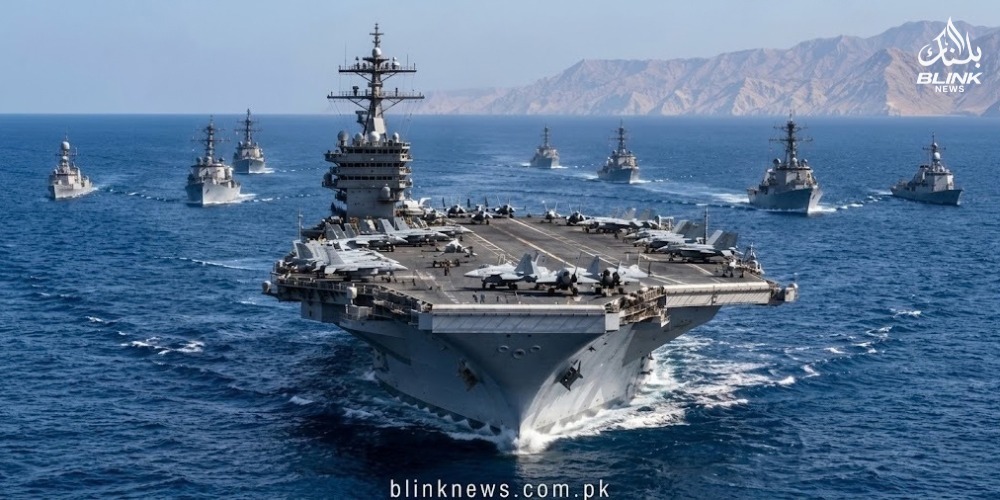
US warships have reportedly moved around 500 kilometers away from the Strait of Hormuz, according to the development highlighted in the latest reports. The reported repositioning has drawn attention because the waterway is one of the world’s most strategically important maritime routes and plays a major role in global energy transportation.
The movement comes amid heightened military and political tensions in the wider Middle East. Any change in the deployment of US Navy ships around the Persian Gulf can attract significant attention because of the strategic importance of the region.
BlinkNews is following the reported development as international attention remains focused on military movements, maritime security and the potential impact on regional stability.
US Warships Reportedly Change Their Position
The reported movement involves US warships that were positioned closer to the Strait of Hormuz before moving farther away from the strategic waterway.
A distance of approximately 500 kilometers represents a notable change in naval positioning. However, a change in position by itself does not establish the reason behind the movement.
Military forces regularly adjust their positions for operational, logistical and security reasons. Naval vessels may also change locations depending on mission requirements, threat assessments, fuel needs, communications and broader military planning.
What the Reported Movement Could Mean
The repositioning could be linked to operational considerations in the region, but the specific reason should not be assumed without confirmation from official military sources.
The US Navy ships operating in and around the Gulf have historically been part of wider American military deployments intended to protect maritime interests and support regional security objectives.
A shift farther from the Strait could therefore represent a temporary operational adjustment rather than a permanent withdrawal from the region.
Why the Strait of Hormuz Is Strategically Important
The Strait of Hormuz is a narrow maritime passage connecting the Persian Gulf with the Gulf of Oman and the Arabian Sea.
It is particularly important for international energy markets because substantial volumes of oil and other energy products pass through the waterway.
Because of this importance, developments involving American warships near the Strait can have implications beyond military affairs.
Markets, shipping companies and governments closely monitor any development that could potentially affect the movement of commercial vessels through the waterway.
A Key Route for Global Energy Supplies
The strategic significance of the Strait of Hormuz means that maritime security in the area remains an international concern.
Any prolonged disruption to commercial shipping could create uncertainty for energy markets and increase concerns about transportation costs and supply chains.
For this reason, the positioning of US military vessels in the surrounding waters is frequently watched by governments and international observers.
Regional Security Remains Under Focus
The reported movement of US military vessels comes against the background of continuing security concerns across the Middle East.
The Persian Gulf and surrounding areas have experienced periods of military tension involving regional and international powers. These developments have increased attention on naval deployments and maritime patrols.
The United States maintains military assets across the wider region, while other countries also operate naval forces in nearby waters.
The reported movement of US warships in the Strait of Hormuz therefore needs to be viewed within this broader regional security environment.
No Clear Confirmation of a Permanent Withdrawal
The reported 500-kilometer movement should not automatically be interpreted as a permanent US naval withdrawal from the Gulf region.
Warships can move significant distances while remaining available for future operations. Their location can change rapidly depending on military requirements and developments on the ground.
For that reason, further statements from the US military or other relevant authorities would be important for establishing the exact purpose and duration of the movement.
International media organizations and security analysts are likely to continue monitoring the location of American naval forces in the region.
What to Watch Next
Several developments could provide more clarity about the situation.
First, official statements from the US Department of Defense or US Navy could explain whether the movement represents a routine operational adjustment or a response to changing security conditions.
Second, further movements by American naval forces could indicate whether the reported repositioning is temporary or part of a broader deployment change.
Finally, developments involving maritime traffic through the Strait of Hormuz could provide additional context about the security situation.
BlinkNews will continue tracking developments related to the US Navy, the Strait of Hormuz and wider Middle East security.
Conclusion
The reported movement of US warships around 500 kilometers away from the Strait of Hormuz has attracted attention because of the waterway’s strategic importance and its role in global energy transportation.
While the repositioning is notable, its exact significance depends on the reason behind the move and any subsequent military or diplomatic developments.
Until official information provides greater clarity, the movement is best understood as a reported change in naval positioning rather than definitive evidence of a permanent withdrawal. Continued monitoring of the US Navy’s deployment and maritime activity will be important as the regional security situation develops.