
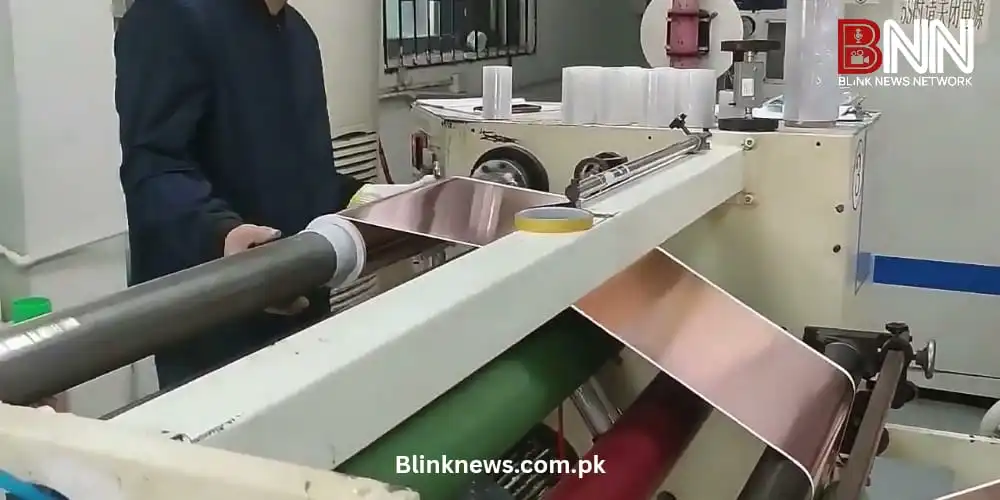
Chinese researchers have developed an ultra-thin copper foil that combines remarkable mechanical strength with the useful properties of copper. The development could open new possibilities for advanced electronics, energy storage, flexible devices and other technologies where materials need to be both thin and durable.
Copper is widely used because it offers excellent electrical conductivity, making it an important material in electronics, electrical systems and batteries. However, reducing copper to extremely small thicknesses can create a major engineering challenge: the material becomes more vulnerable to deformation and damage.
The new research addresses this challenge by demonstrating how copper can retain exceptional strength even when produced in an ultra-thin form.
Why Ultra-Thin Copper Foil Matters
Copper foil already plays an important role in modern technology. It is used in printed circuit boards, electronic components and lithium-ion batteries, among many other applications.
As electronic products become smaller and lighter, manufacturers increasingly need materials that can deliver high performance without adding unnecessary weight or thickness.
This makes ultra-thin copper foil particularly important. A thinner conductive layer can help manufacturers develop compact components while potentially improving the design flexibility of electronic systems.
The challenge is that conventional approaches to making metals stronger can sometimes affect other desirable characteristics, including electrical conductivity or flexibility.
Balancing Strength and Conductivity
Copper is naturally valued for its ability to conduct electricity efficiently. At the same time, engineers need copper components to withstand mechanical stress during manufacturing and everyday use.
Researchers working in materials science have therefore been exploring ways to improve the strength of copper without losing its key characteristics.
The newly developed material represents an important step in this direction. By controlling the structure of copper at very small scales, researchers were able to produce a foil with exceptional strength while maintaining the characteristics that make copper useful for technological applications.
How the New Copper Material Could Be Used
The development could have implications across several technology sectors.
Electronics and Flexible Devices
Modern electronics increasingly depend on thin and lightweight components. Stronger copper foil could potentially make conductive components more resistant to bending, stretching and mechanical stress.
This could be useful in flexible electronics, compact devices and other applications where conventional materials may face durability limitations.
Batteries and Energy Storage
Copper foil is also an important component in lithium-ion battery manufacturing. It is commonly used as a current collector for the battery’s anode.
As battery manufacturers work toward higher energy density and thinner designs, advanced copper foil could become increasingly valuable. Stronger and thinner materials could help support manufacturing requirements while contributing to lighter and more compact battery systems.
However, the practical impact will depend on factors such as production cost, manufacturing scalability and compatibility with existing battery-production processes.
A Development in Advanced Materials Science
The research highlights a broader trend in advanced copper materials: scientists are increasingly manipulating materials at microscopic and nanoscale levels to improve their performance.
Instead of simply using more material, researchers are looking at how the internal structure of a material can be engineered to deliver greater strength and efficiency.
This approach is particularly relevant to industries seeking lightweight materials with high performance.
The achievement also demonstrates the continuing importance of materials science in solving problems created by miniaturization. As devices become smaller, the materials inside them must often perform under increasingly demanding conditions.
Potential Impact on Future Technology
If the technology can be manufactured economically at commercial scale, ultra-thin high-strength copper foil could find applications in several areas.
Potential uses include advanced circuit boards, batteries, flexible electronics, wearable technology and other electronic systems requiring thin conductive materials.
The development could also encourage further research into metals that combine multiple desirable properties rather than optimizing only one characteristic.
For manufacturers, the ability to use thinner but stronger copper could potentially provide greater design flexibility. For consumers, improvements in materials could eventually contribute to smaller, lighter and more durable electronic products.
Nevertheless, laboratory research and commercial production are different stages of technological development. Further testing will be needed to determine how the material performs under large-scale manufacturing conditions and long-term use.
Why the Research Is Significant
The creation of strong ultra-thin copper foil demonstrates how modern materials engineering is moving beyond traditional limits.
Copper has been used for generations, but researchers continue to discover new ways to improve its performance. By controlling its structure at extremely small scales, scientists are exploring opportunities that could support the next generation of electronics and energy technologies.
The research is therefore significant not only because of the copper foil itself, but also because it illustrates how advanced manufacturing and nanotechnology can reshape familiar materials.
Conclusion
Chinese researchers’ development of an ultra-thin copper foil with exceptional strength could become an important development in advanced materials science. The technology combines the thinness and electrical usefulness of copper with improved mechanical performance.
Potential applications range from electronics and flexible devices to lithium-ion batteries and energy-storage systems. While additional research and commercial-scale testing will be important, the development highlights the potential of engineered materials to support smaller, lighter and more durable technologies.
FAQs
1. What did Chinese researchers develop?
Chinese researchers developed an ultra-thin copper foil designed to provide exceptional mechanical strength while retaining the useful properties of copper.
2. Why is ultra-thin copper foil important?
Ultra-thin copper foil can help manufacturers create thinner, lighter and more compact electronic and energy-storage components.
3. Where is copper foil commonly used?
Copper foil is widely used in electronics, printed circuit boards and lithium-ion batteries, where it can serve important electrical and conductive functions.
4. Could the new copper foil be used in batteries?
The technology could have potential applications in battery manufacturing because copper foil is already used as a current collector in lithium-ion batteries. Commercial use would depend on further testing and manufacturing requirements.
5. What makes the new copper foil different?
Its key feature is the combination of extremely low thickness with exceptional strength, addressing a major challenge in developing thin metal components for advanced technologies.